There’s a particular kind of heartbreak that only a baker understands — you spend an entire evening in the kitchen, the whole house smells like butter and vanilla, and two days later, the same cake that made everyone go quiet with the first bite has turned dry at the edges. Or the cookies that were crisp and buttery on day one go soft and sad by day three. Or worse — the bread you were so proud of has a spot of mould before the week is even out.
In all my years of baking — and after more baking disasters than I’d like to admit — I’ve learned that how you bake something is only half the story. How you store it decides how long that joy actually lasts.
So today, I want to walk you through everything I know about storing cakes, cookies, and bread properly — the science behind why they go stale, the mistakes most of us make without realising it, and the exact methods I use in my own kitchen to keep every bake tasting like it just came out of the oven.
Why Baked Goods Go Stale in the First Place
Before we get into the how, it helps to understand the why — because once you understand what’s actually happening, the right storage method starts to make a lot more sense.
Staling isn’t just about drying out. It’s a process called starch retrogradation — the starch molecules in flour, which were softened and gelatinised by heat and moisture during baking, slowly rearrange themselves back into a firmer, more crystalline structure as the bake cools. This is why bread turns tough, cake turns dry and crumbly, and cookies lose that just-baked tenderness — even when they haven’t technically “dried out” at all.
Three factors speed this process up or slow it down:
- Moisture loss or moisture imbalance — too little moisture and things go dry and hard; too much trapped moisture and things go soggy or mouldy.
- Air exposure — oxygen accelerates staling and, for anything with fat (butter, cream, nuts), it also causes rancidity over time.
- Temperature — surprisingly, the fridge is often the worst place for cakes and bread, because staling actually happens fastest at refrigerator temperatures (just above freezing), not at room temperature or in the freezer.
Keep those three factors in mind — moisture, air, and temperature — because every single tip below is really just managing these three things.

How to Store Cakes to Keep Them Moist and Fresh
Unfrosted / Plain Cakes
- Let the cake cool completely before wrapping — wrapping while warm traps steam, which leads to a soggy, gummy texture and faster mould growth.
- Wrap tightly in cling film, pressing it directly against the cut surface to prevent air contact. Follow with a layer of foil for extra protection.
- Store at room temperature in a cool, dry spot for 2–3 days, or refrigerate for up to a week if your kitchen is warm or humid.
Frosted Cakes (Buttercream, Cream Cheese, Ganache)
- If the frosting contains dairy (cream cheese frosting, whipped cream, custard fillings), it must be refrigerated for food safety — but do so in an airtight cake box or under a dome to prevent the fridge from drying it out and pulling in other food odours.
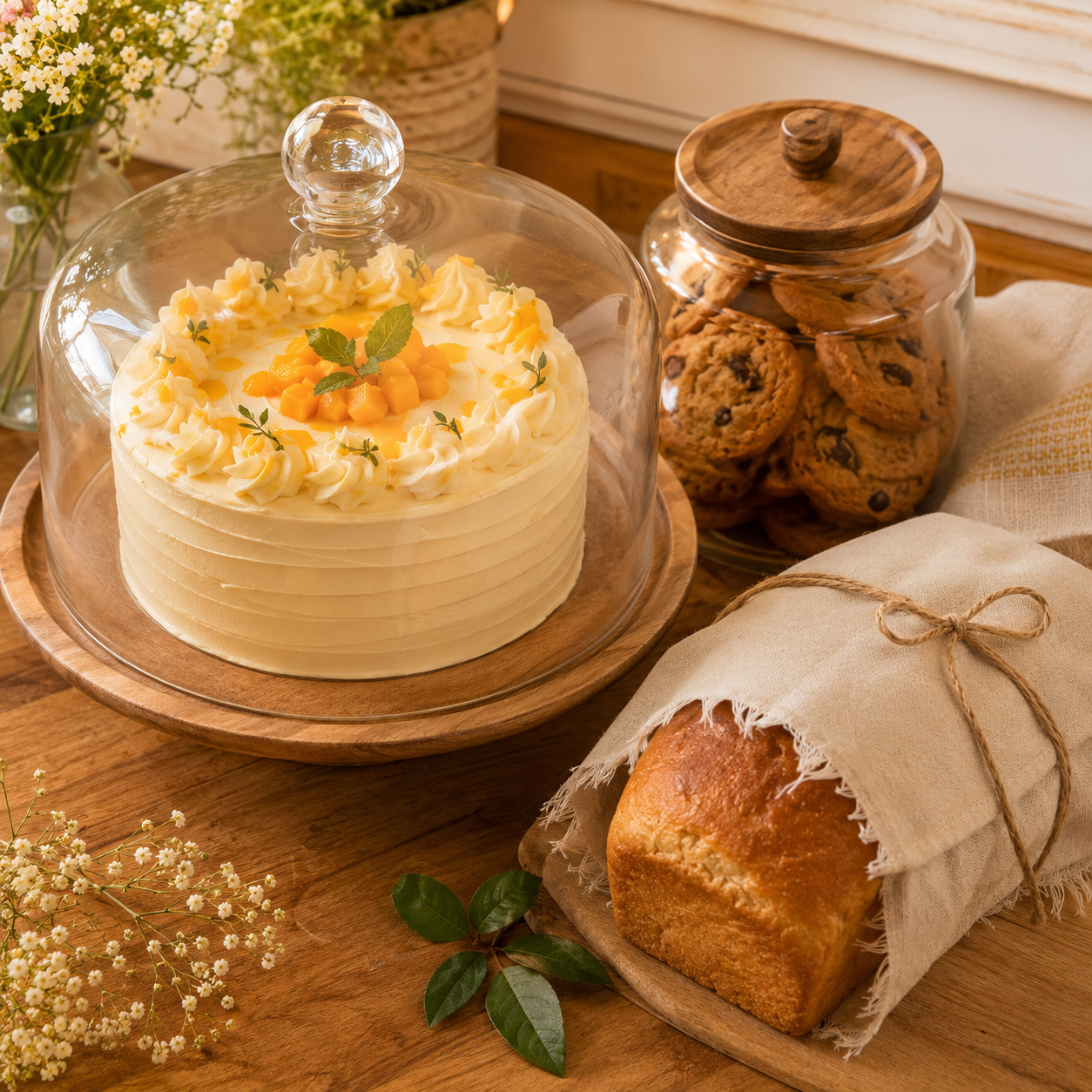
- Buttercream-frosted cakes can sit at room temperature for a day or two in cooler climates, but always under a cake dome or upturned large bowl — never uncovered.
- Bring refrigerated cake to room temperature for 30–45 minutes before serving; cold cake mutes flavour and firms up the crumb.
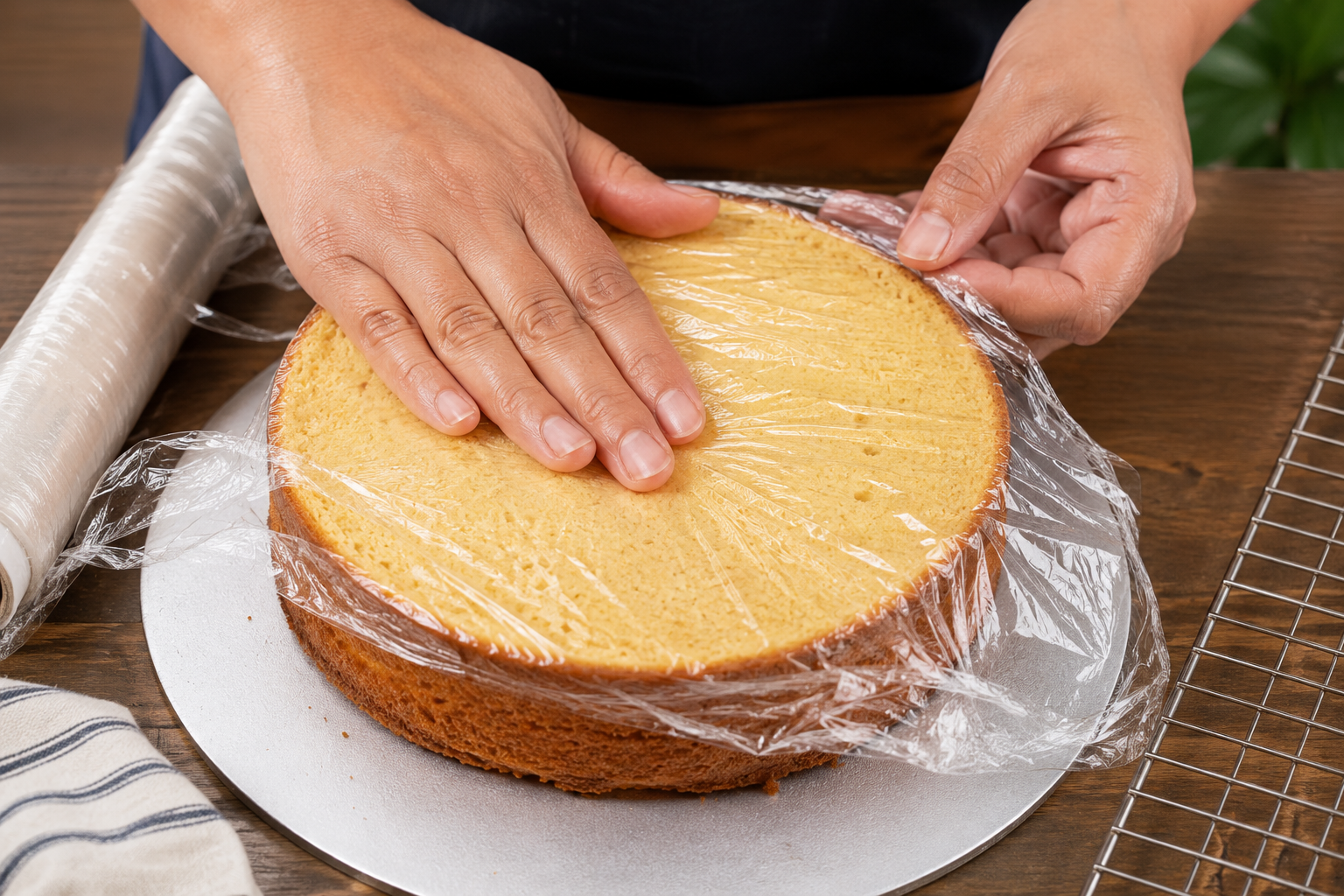
Freezing Cakes
Cakes freeze beautifully, and this is genuinely one of my favourite baking hacks.
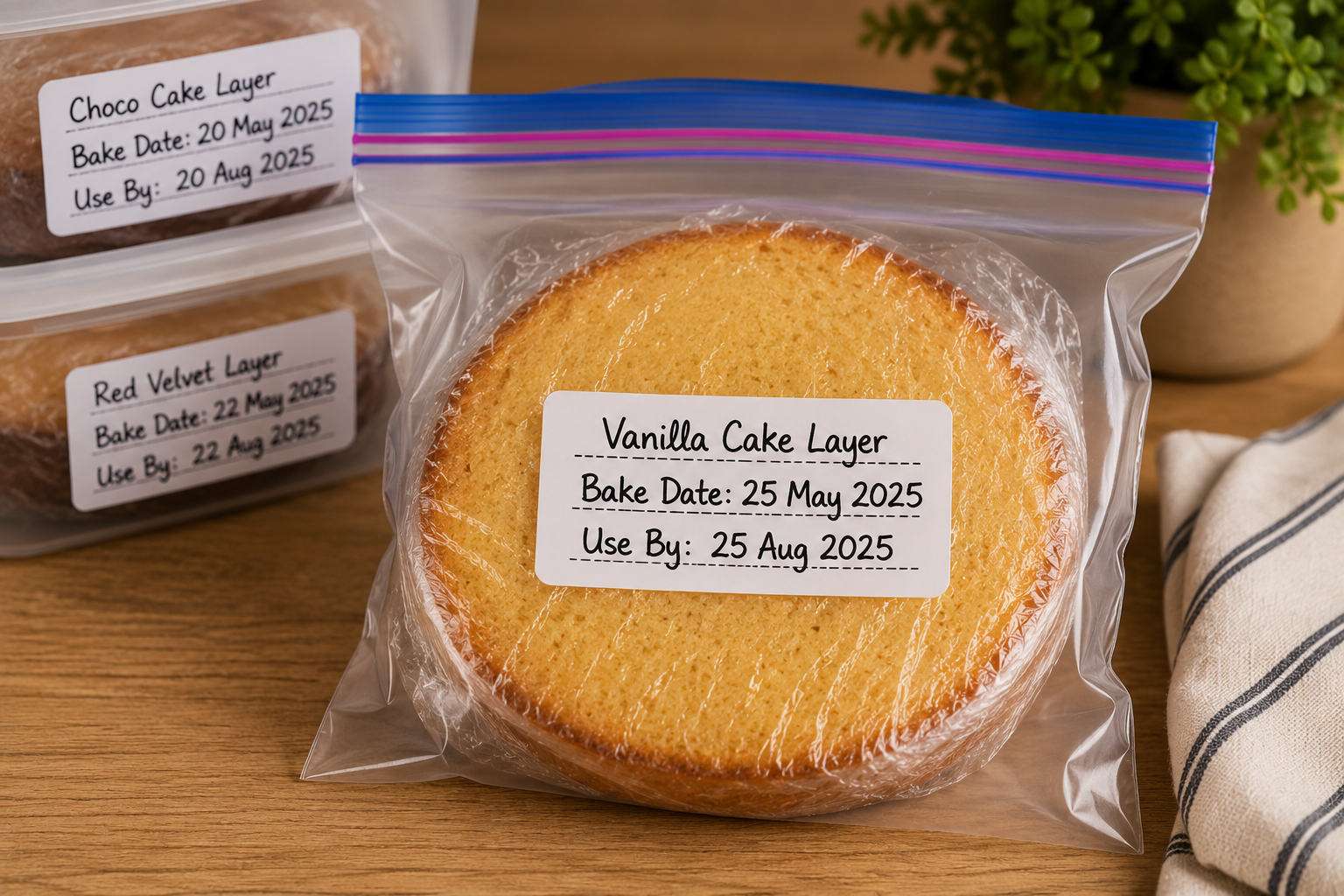
- Freeze unfrosted layers wrapped in cling film, then foil, then a freezer-safe bag — this triple layer prevents freezer burn.
- Frosted cakes can be frozen too: flash-freeze uncovered for an hour so the frosting firms up, then wrap without smudging it.
- Thaw overnight in the refrigerator, then bring to room temperature before serving. Cakes keep well in the freezer for up to 2–3 months.
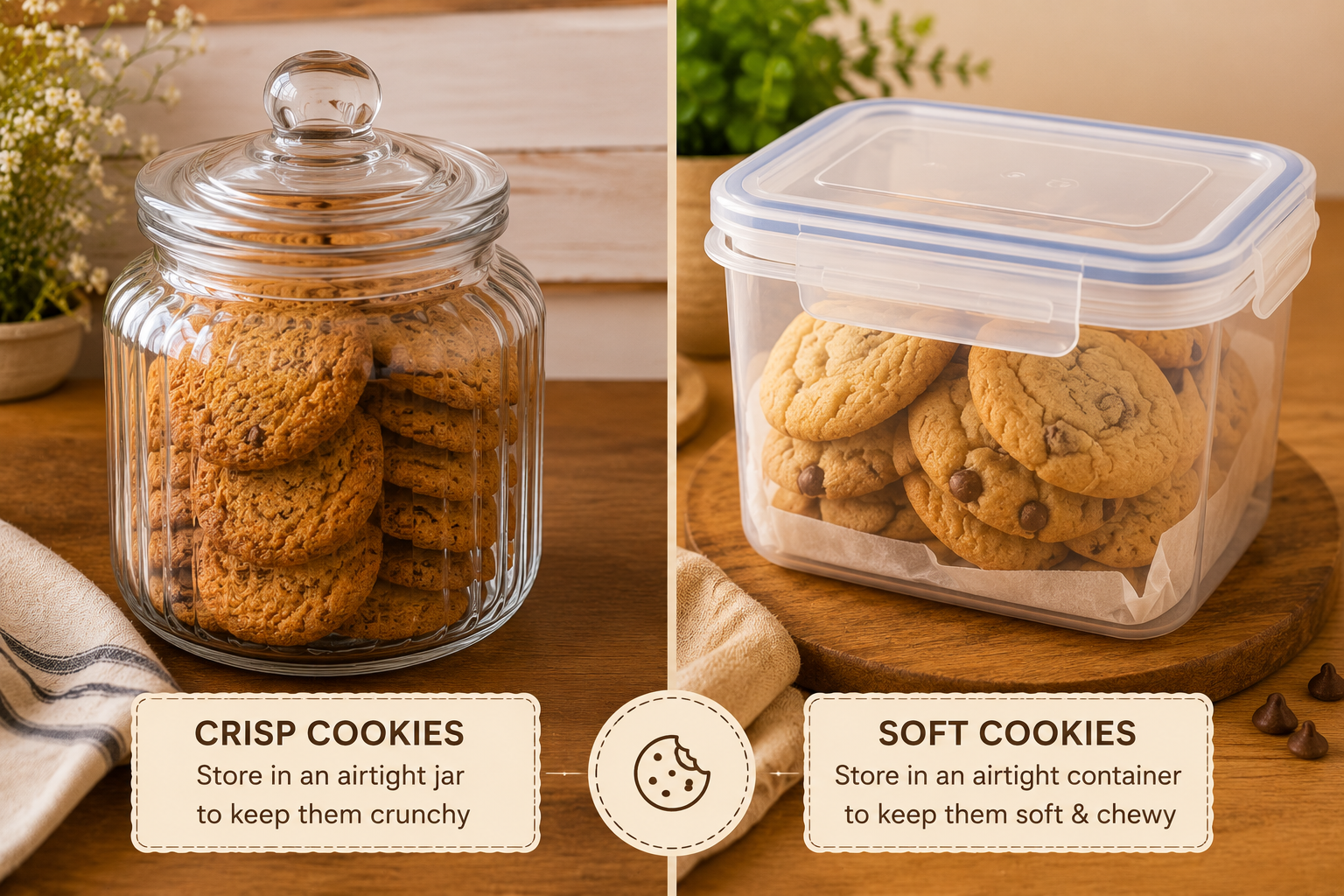
How to Store Cookies to Keep Them Crisp or Chewy — On Purpose
Cookie storage has one golden rule that trips up almost everyone: never store crisp and soft/chewy cookies together. Moisture migrates from the softer cookie to the crisper one, and within a day, your crisp cookies turn soft and your chewy ones dry out. Always store different textures separately.
For Crisp Cookies
- Store in an airtight container at room temperature, layered with parchment or wax paper between layers.
- Add a small piece of bread to the container if you notice them softening — the cookies will pull moisture from the bread instead of from the air (replace the bread every couple of days).
- Avoid the fridge; the humidity in there is exactly what you’re trying to avoid.
For Soft or Chewy Cookies
- Store in an airtight container with a slice of bread placed inside — this time, the bread donates moisture to the cookies and keeps them soft for days longer. This is an old baker’s trick that genuinely works.
- Keep at room temperature; refrigeration will dry them out faster, not slower.
For Cookies with Cream or Custard Fillings
- These must be refrigerated in an airtight container and are best eaten within 3–4 days.
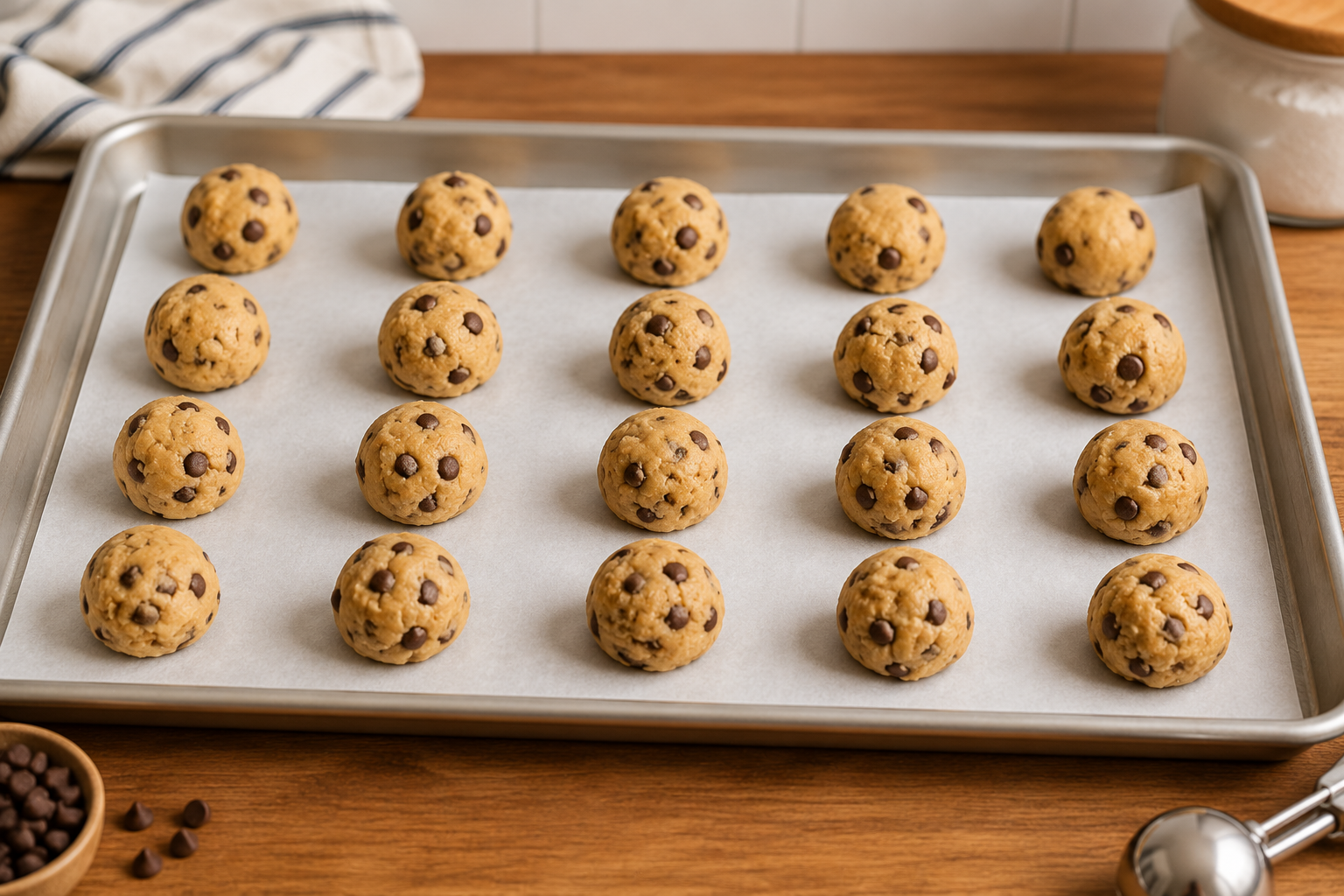
Freezing Cookie Dough vs. Baked Cookies
- Raw dough freezes exceptionally well — portion into balls, freeze on a tray until solid, then transfer to a freezer bag. Bake directly from frozen, adding 1–2 extra minutes.
- Baked cookies can also be frozen in an airtight container for up to 2 months; thaw at room temperature for 15–20 minutes before serving.
How to Store Bread So It Doesn’t Go Stale or Mouldy
Bread is the trickiest of the three, because the very thing that keeps it from drying out (a sealed environment) is also the thing that encourages mould. Getting this balance right makes all the difference.
Short-Term Storage (2–3 Days)
- Store crusty, artisan-style breads (like a no-knead loaf) cut-side down on a wooden board, or in a paper bag — this keeps the crust crisp without trapping moisture.
- Store soft sandwich breads or enriched breads in a plastic bag or bread box, which retains moisture and keeps the crumb soft.
- Avoid the refrigerator entirely. As mentioned earlier, bread stales fastest at fridge temperature — a loaf left on the counter will actually outlast one in the fridge.
Long-Term Storage (Freezing)
- Slice the bread before freezing so you can pull out only what you need — this avoids repeated thawing and refreezing, which badly affects texture.
- Wrap tightly in cling film, then place in a freezer bag with the air pressed out, or use a proper freezer-safe container.
- Bread keeps well in the freezer for up to 3 months. Toast slices directly from frozen, or thaw at room temperature for about an hour.
Reviving Slightly Stale Bread
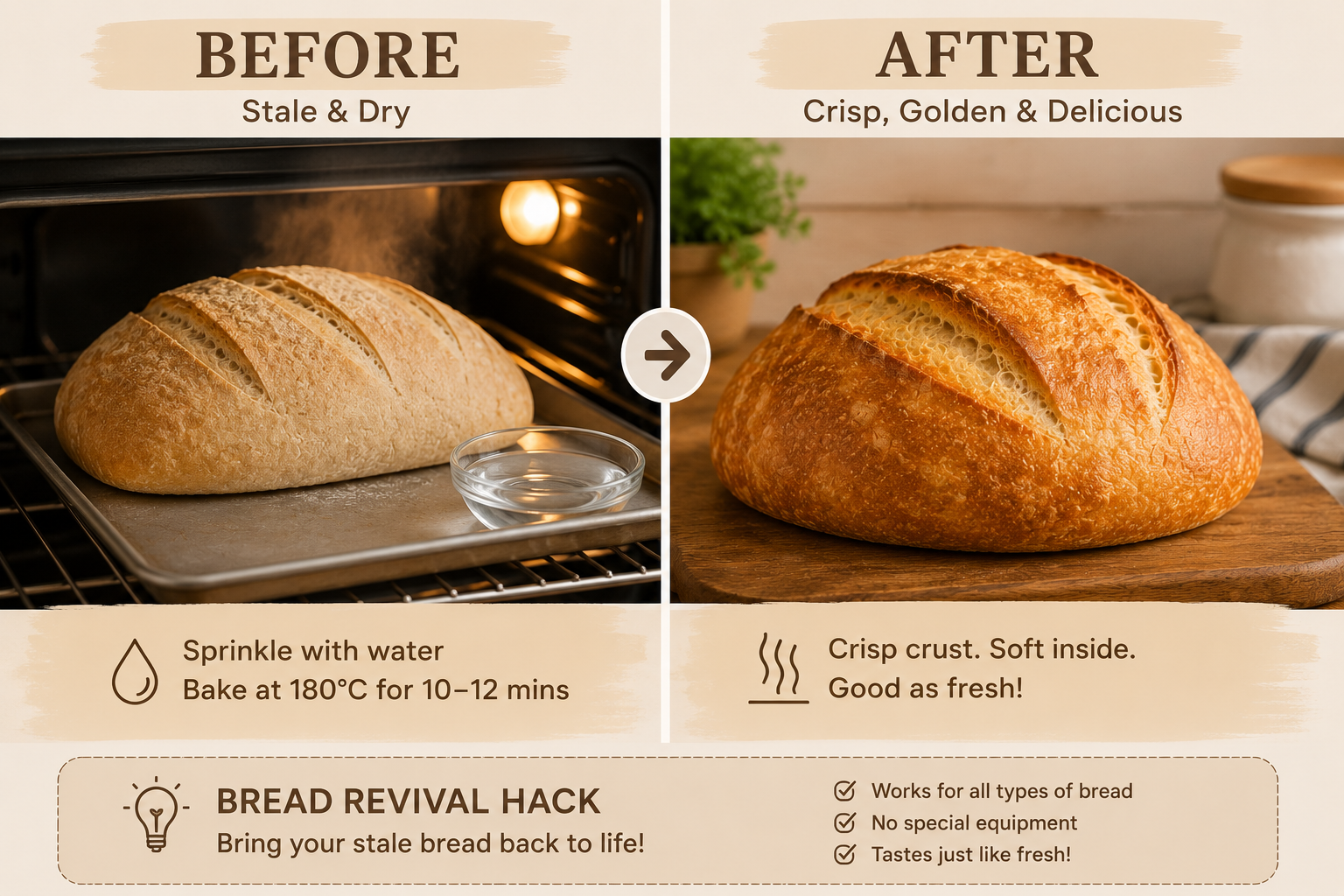
- A few seconds under running water followed by 8–10 minutes in a hot oven (180°C) can bring a stale crusty loaf back to life — the crust re-crisps and the crumb steams back to softness.
- For soft breads, a few seconds in the microwave wrapped in a damp paper towel work well in a pinch, though it won’t last — eat it soon after reviving.
General Storage Mistakes to Avoid
- Storing warm bakes. Always cool completely before wrapping or boxing — warm bakes trap steam, which leads to sogginess and faster spoilage.
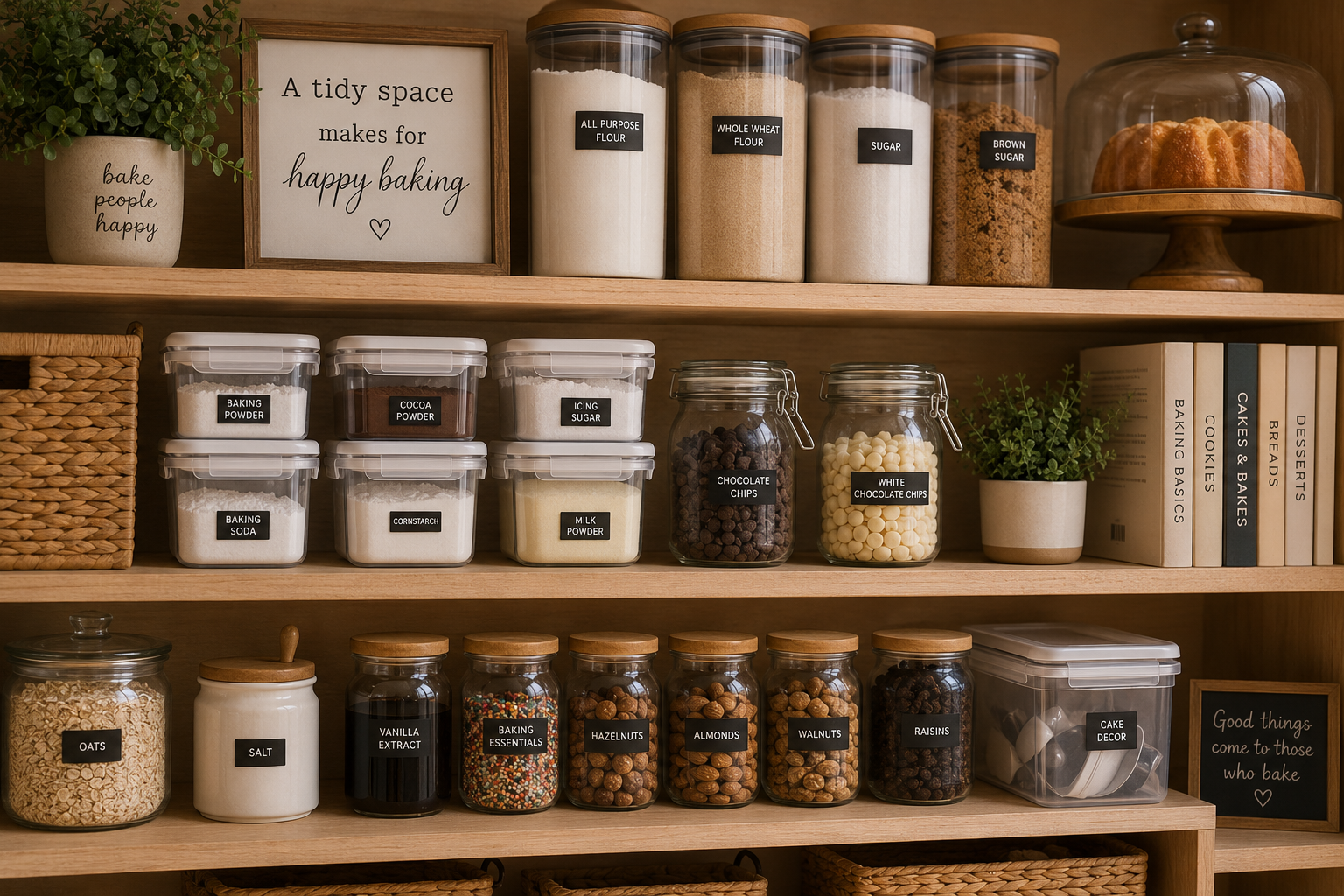
- Using the wrong container. Loosely covering with a cloth won’t stop staling; airtight really does mean airtight.
- Refrigerating out of habit. Not everything benefits from the fridge — in fact, for cake and bread, it often works against you unless there’s a dairy-safety reason to do so.
- Mixing textures and flavours. Strong-flavoured bakes (like a spiced cake or garlic bread) can transfer their aroma to milder ones stored nearby — always separate them.
- Forgetting to label the freezer. A frozen, unlabelled cake layer is a mystery six weeks later. A simple masking-tape label with the bake name and date saves so much confusion.
A Quick Reference: What Goes Where
| Bake | Room Temp | Refrigerate | Freeze |
|---|---|---|---|
| Unfrosted cake | 2–3 days, wrapped | Up to 1 week | Up to 3 months |
| Frosted cake (buttercream) | 1–2 days, covered | Up to 5 days | Up to 2 months |
| Frosted cake (cream/custard) | Not recommended | Up to 4 days | Not recommended |
| Crisp cookies | 1–2 weeks, airtight | Not recommended | Up to 2 months |
| Soft/chewy cookies | 4–5 days, airtight | Not recommended | Up to 2 months |
| Crusty bread | 2–3 days | Not recommended | Up to 3 months |
| Soft/sandwich bread | 3–4 days | Not recommended | Up to 3 months |
The Bottom Line
Good storage isn’t a fussy extra step — it’s what protects all the effort you put into the baking itself. Once you understand that staling is about managing moisture, air, and temperature, everything else — wrapping, freezing, choosing the right container — starts to feel like common sense rather than a list of rules to memorise.
The next time you pull a cake out of the oven or a fresh loaf off the cooling rack, give it those extra two minutes of proper wrapping. Future you — reaching for a slice a few days later — will be very grateful.
Related Recipes You’ll Love
- No-Knead Artisan Bread — a beautifully crusty loaf that’s perfect for practising the storage tips above. [Link]
- Classic Butter Cake — my most-loved cake recipe and a great one to test the freezing method on. [Link]
- Eggless Chocolate Chip Banana Muffins — a soft, moist bake that benefits hugely from the right storage container. [Link]
Want more baking magic in your life? Subscribe to my YouTube channel — Deepali Ohri — for new recipes every week. Follow along for daily baking inspiration: Instagram | Pinterest | Facebook.