How to Store Pantry Staples: 5 Common Mistakes & Easy Fixes
Most of us don’t lose good food to bad cooking. We lose it quietly, inside the kitchen cupboard, because very few of us were ever taught how to store pantry staples properly.
The whole wheat flour that makes your bread taste slightly bitter. The chickpea flour with tiny insects in it. The walnuts that taste stale and papery. The cinnamon that smells of nothing. The cocoa that has set into hard, dull lumps. None of these went bad because they were cheap or old stock. In almost every case, they went bad because of how they were stored.
The good news is that fixing this rarely costs anything. You don’t need special gadgets or expensive containers. You only need to understand what each staple is sensitive to, and store it accordingly.
Food science makes this simple. Pantry staples are spoiled by the same five enemies: air (oxygen), moisture, heat, light and insects. Each staple is weak against a different enemy. Once you know which one, the fix is usually a jar, a shelf or a fridge away.
First, know your climate
The same flour lasts very differently in Singapore and in Stockholm. Most food-storage guidance puts the ideal pantry at about 10–21°C (50–70°F), dry and dark. Every 10°C (18°F) rise roughly doubles the speed of the chemical reactions that make fats go rancid. Find your climate below, and use it to adjust every tip in this article.
| Climate | Typical regions | Main risk to your pantry | What to change |
|---|---|---|---|
| Hot and humid | South and Southeast Asia, West and Central Africa, the Caribbean, Central America, northern Brazil, northern Australia, the US Gulf Coast | Heat plus moisture: rancidity, mould, clumping and insects all at once | Refrigerate flours, nuts and chilli-based spices most of the year; keep everything airtight |
| Hot and dry | The Middle East, North Africa, the US Southwest, northern Mexico, inland Australia | Heat: fast rancidity and fading spices; mould is less of a problem | Keep flours and nuts cold in summer; keep spices far from the stove |
| Mediterranean | Southern Europe, California, central Chile, South Africa’s Cape, southern Australia | Hot, dry summers; mild, damp winters | Follow hot-climate rules from June to September (December to March in the southern hemisphere) |
| Temperate | The UK, northern and central Europe, New Zealand, the US Pacific Northwest, Japan and Korea outside summer | Mild most of the year; summer humidity in parts of East Asia | A cool cupboard works for most of the year; refrigerate in hot or humid spells |
| Cold | Canada, Scandinavia, Russia, the northern US | Central heating makes kitchen cupboards warm and dry in winter | Avoid cupboards near radiators, ovens and hot-water pipes; freezer storage is easy and very effective |
Wherever you live, remember that your kitchen has its own climate. The cupboard above the stove or kettle, or beside the oven, can be 10°C (18°F) warmer than the rest of the room. So here is how to store pantry staples the right way: the five most of us store wrong, what exactly goes wrong, and how to fix each one.
1. Whole wheat flour
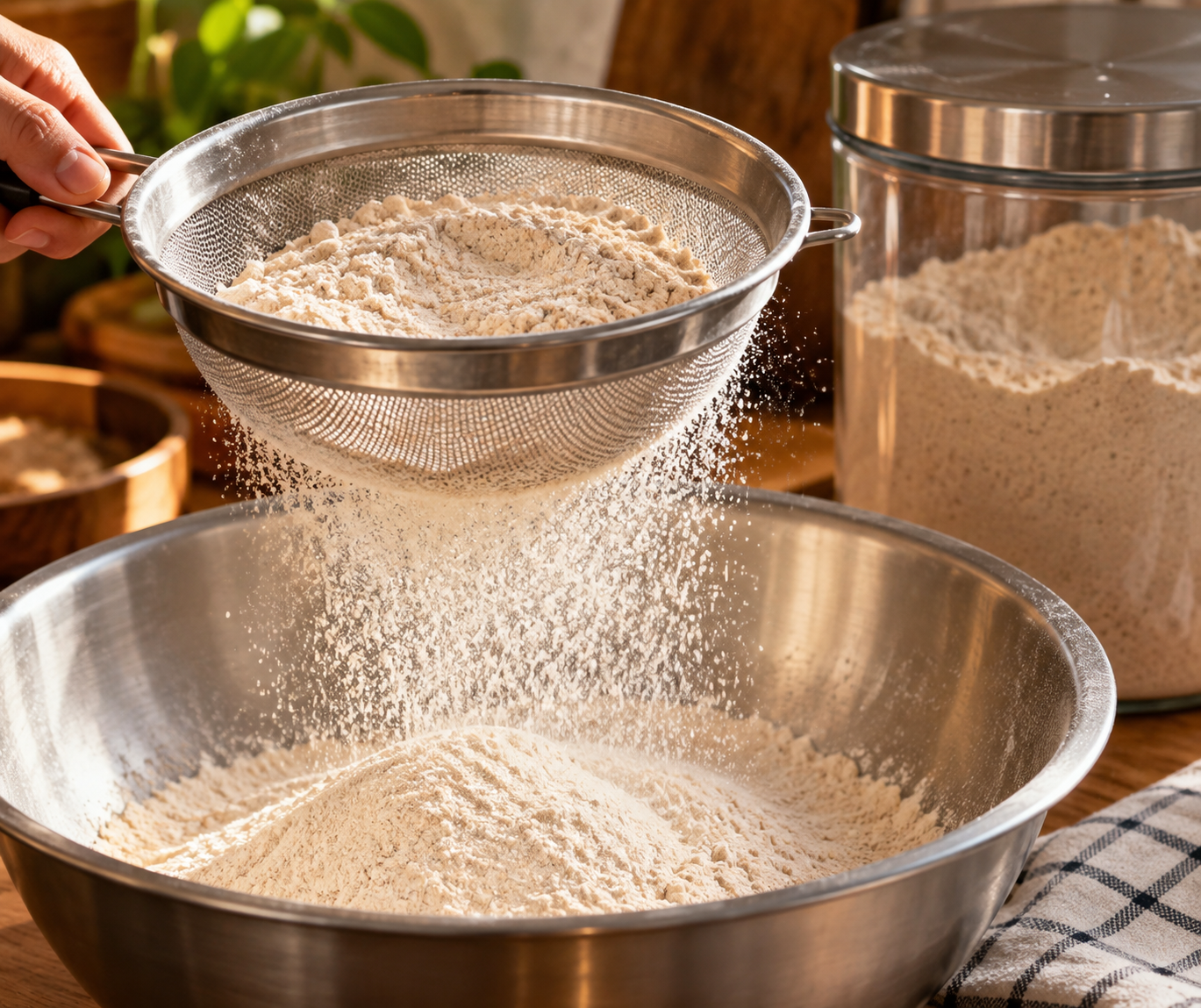
rancid far sooner than white flour.
What goes wrong
Most people store whole wheat flour exactly like white all-purpose flour and expect it to last for months. It doesn’t. White flour is milled from only the starchy centre of the grain. Whole wheat flour also contains the bran and the germ, and the germ is rich in natural oils.
The moment the grain is milled, those oils meet air. Enzymes naturally present in wheat (mainly lipase) start breaking the fats into free fatty acids, and oxygen slowly oxidises them. The result is rancidity: a bitter, sour or stale smell, and bread, flatbreads and bakes that taste slightly “off”. Heat speeds this up, which is why flour turns much faster in summer, and faster in Bangkok than in Berlin.
The second problem is insects. Flour beetles and pantry moths love wholegrain flour, and their eggs are often already present, too small to see. Warmth and humidity let them hatch. The habit that makes it worse is topping up: pouring fresh flour on top of the last of the old flour in the same container. Any eggs or rancid flour at the bottom now spread into the new batch.
How to fix it
-
- Buy smaller bags. As a guide, whole wheat flour keeps its best quality for about 1 to 3 months in a cool cupboard, up to 6 months in the fridge, and up to a year in the freezer. Freshly stone-ground flour sits at the shorter end. In hot, humid climates, count on the shortest times.
- Finish, clean, then refill. Empty the container completely, wash it, let it dry fully, and only then add fresh flour. Never top up.
- Use an airtight container with a tight lid: glass, stainless steel or thick food-grade plastic. Not the paper bag it came in; paper lets air, moisture and insects through.
- Keep it away from heat and steam. Not beside the stove or oven, not above the kettle or dishwasher, not near the back of the fridge where warm air blows out.
- Always scoop with a dry cup or spoon. Wet hands or a damp scoop add moisture, which brings lumps and mould.
- Refrigerate or freeze it in warm weather, sealed airtight. Let it come to room temperature before baking, since cold flour can slow yeast.
- Kill hidden eggs. Freezing newly bought flour in a sealed bag for at least 3 to 4 days at −18°C (0°F) kills insect eggs and larvae. This is a standard pest-control step in food storage.
About the bay leaf trick: bay leaves, neem leaves or dried chillies tucked into the flour tin are an old home remedy in many cultures. They may discourage some insects, but they do not kill eggs already present and they cannot stop rancidity. Treat them as an extra, not the fix.
How to tell your flour has turned: a sour, bitter or paint-like smell, a sharp aftertaste in your bakes, fine webbing, lumps that don’t break easily, or tiny moving specks after sifting. If it smells rancid or shows webbing, throw it out.
2. Chickpea flour (gram flour)
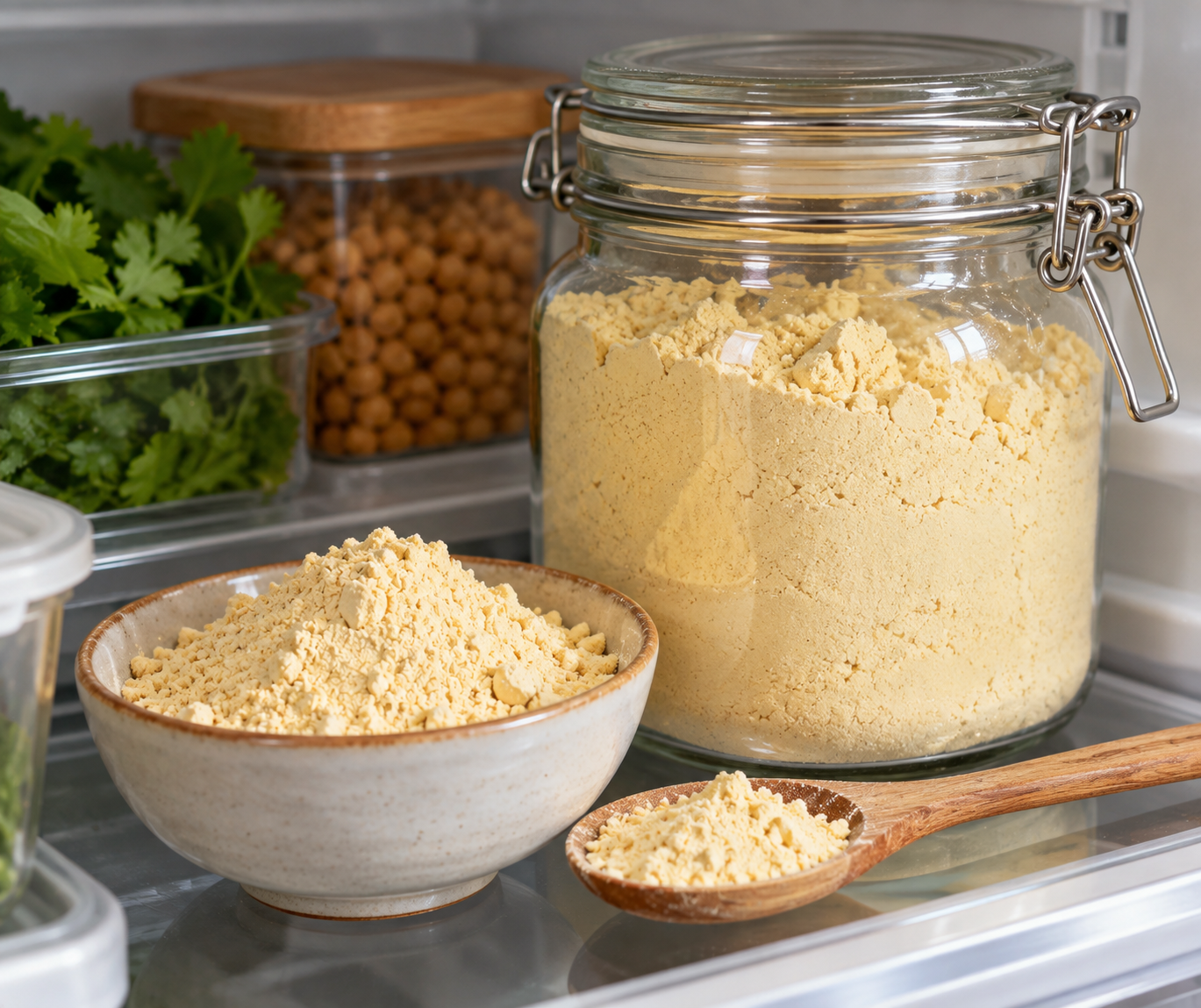
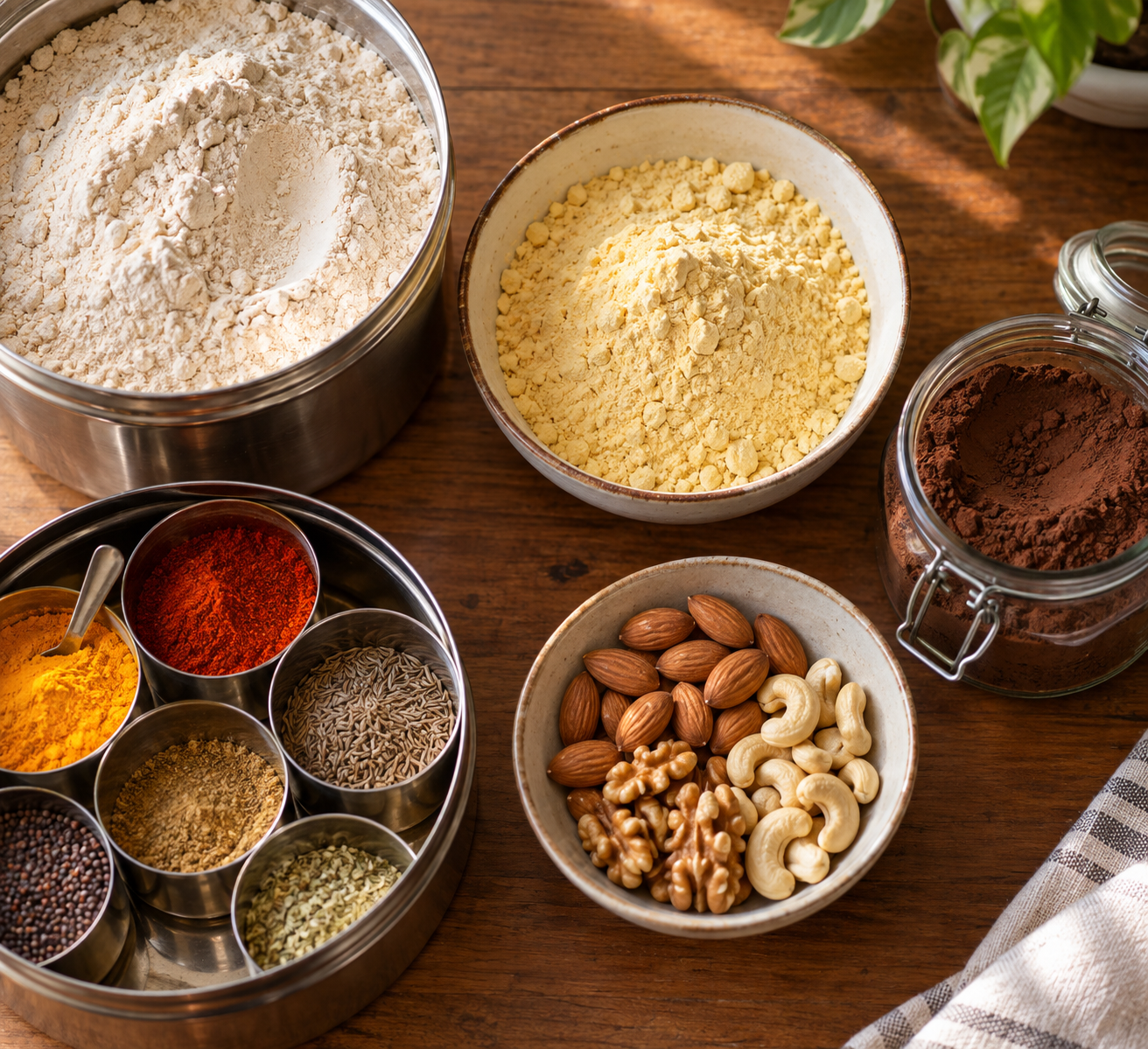
friend.
Chickpea flour (also sold as gram flour or garbanzo bean flour) is a staple well beyond one cuisine. It goes into socca and farinata in southern France and Italy, panisse, falafel mixes, fritters, flatbreads, and more and more gluten-free and vegan baking.
What goes wrong
Chickpea flour is ground from dried chickpeas, and it carries more natural fat than wheat flour along with a lot of protein. More fat means faster rancidity. Stale chickpea flour has a distinct bitter, sharp aftertaste that shows through in simple recipes, where there is nothing to hide it.
It also absorbs moisture from the air very easily. In humid weather it forms hard lumps, and damp flour is where mustiness and mould begin. Like all legume products, it is a favourite of pantry beetles.
The usual mistakes: buying a large bag because it is cheaper per kilo, keeping it half-open with a clip or rubber band, and storing it in the same warm cupboard as everything else.
How to fix it
-
- Buy the smallest bag you will finish within a month or two. Most homes use far less chickpea flour than wheat flour, so the bulk bag rarely saves money.
- Move it into an airtight glass or steel jar as soon as the bag is opened. Clips and rubber bands do not keep humid air out.
- Refrigerate it. Chickpea flour genuinely does better in the fridge in any warm or humid climate, and in summer everywhere. Cold slows both rancidity and insects. Use an airtight jar so it doesn’t pick up fridge smells.
- Freeze it for long-term storage, especially if you only use it now and then.
- Keep it dry. Always use a dry spoon. Let a cold jar sit for a few minutes before opening it in a warm kitchen, so moisture doesn’t condense inside.
- Sift before use. It breaks up lumps and lets you spot any insects early.
The quick test: touch a tiny pinch of the raw flour to your tongue. Fresh chickpea flour tastes mild and slightly nutty. If it is sharply bitter or smells musty, it has gone rancid and will spoil your dish. Throw it out.
3. Nuts and dried fruit
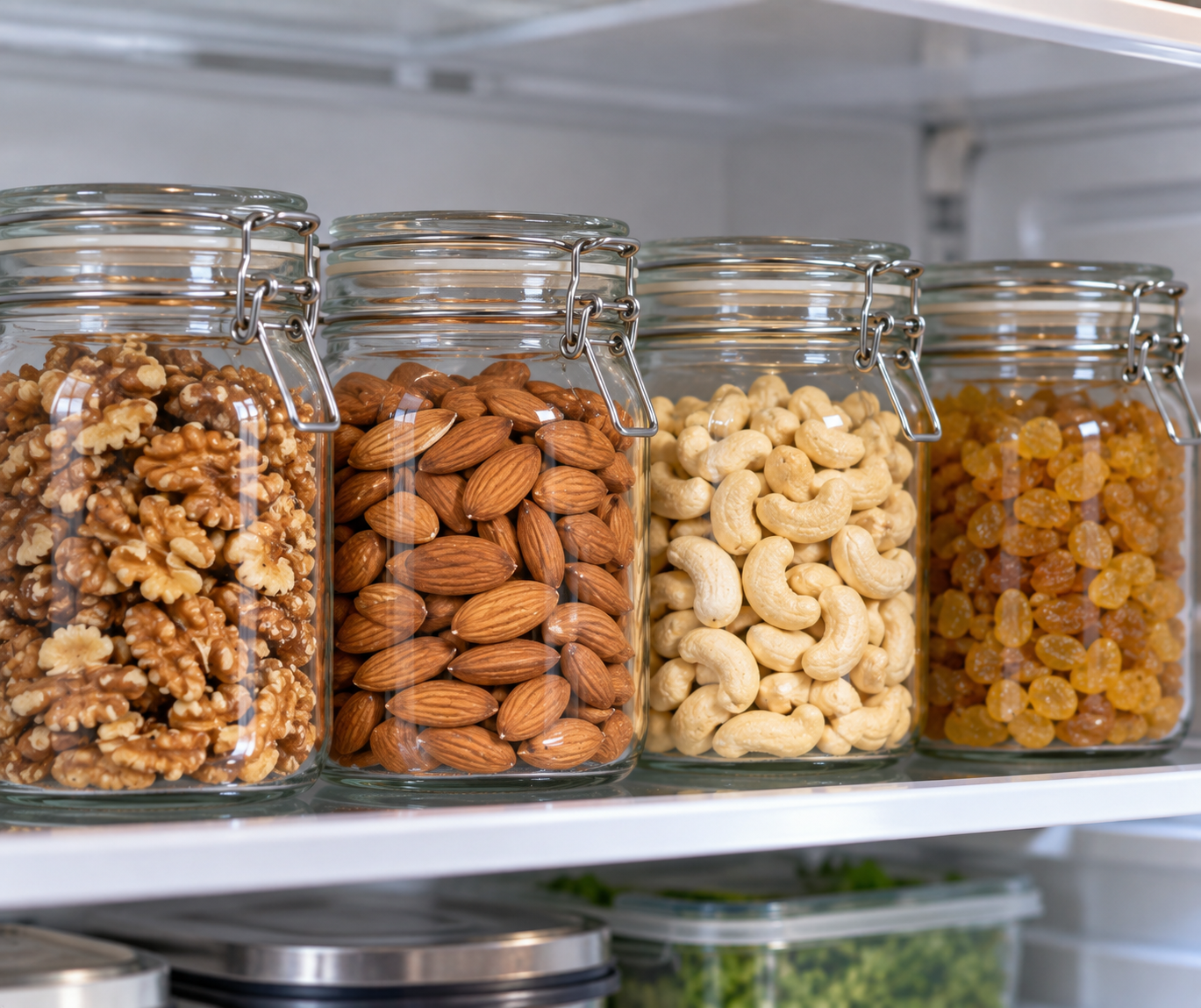
rancid.
What goes wrong
Nuts are expensive, so we often keep them somewhere pretty: an open bowl on the table, the holiday gift tin on a shelf, or the resealable bag in a warm kitchen cupboard. That is exactly where they spoil fastest.
Nuts are roughly 50 to 70 percent fat. Much of it is unsaturated fat, which is good for us but chemically fragile. Oxygen, warmth and light break it down, and the nuts turn rancid: bitter, soapy or paint-like in smell, and slightly rubbery in texture. Walnuts and pecans are the most fragile because they are rich in polyunsaturated fats. Almonds are more stable, and cashews, hazelnuts and pistachios sit in between. Roasted or salted nuts go rancid faster than raw ones, because roasting has already started the oxidation.
Moisture brings a more serious problem. Warm, damp nuts can grow mould, and some moulds (especially Aspergillus species) produce aflatoxins, which, according to the World Health Organisation, can seriously damage the liver. These toxins are chemically stable, so ordinary cooking and roasting do not reliably destroy them. The risk is highest in warm, humid conditions.
The third mistake is mixing everything in one container. Raisins, figs, dates and apricots hold moisture; nuts are dry. Stored together, the nuts go soft and the dried fruit dries out.
How to fix it
-
- Store nuts and dried fruit separately, each in its own airtight glass or steel jar.
- Refrigerate nuts you won’t finish within a few weeks. In an airtight jar they stay fresh for several months.
- Freeze for long-term storage. Nuts freeze very well and keep for up to a year. Their low water content means they don’t freeze solid, so you can scoop out what you need.
- Open cold jars only once they reach room temperature, especially in humid weather, so water doesn’t condense on the nuts.
- Empty holiday gift tins and boxes into jars soon after they arrive. Decorative packaging is rarely airtight.
- Buy nuts in the shell if you use them slowly. The shell is nature’s own airtight container.
- Toast only what you will eat within a week or two.
- Dried fruit keeps for a few months in an airtight jar in a cool cupboard, and longer in the fridge. White, sugary spots on raisins, dates or figs are usually natural sugar crystals, not mould. Fuzzy growth is mould.
When to throw them out: any bitter or paint-like smell, a soapy aftertaste, visible mould, or nuts that look unusually dark or shrivelled. Never pick out the mouldy pieces and eat the rest, since toxins can be present in pieces that look fine. When in doubt, throw it out.
4. Spices
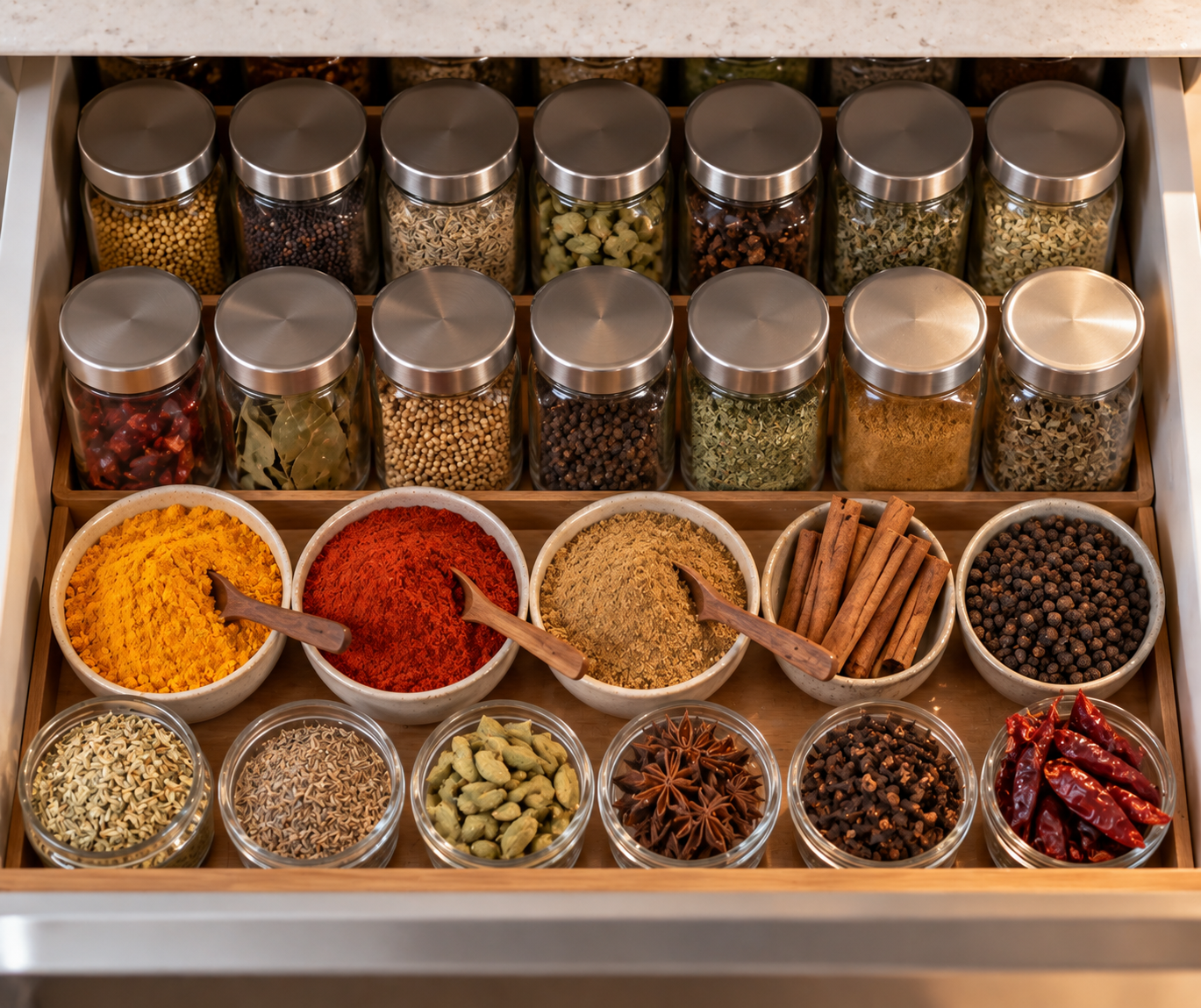
keeps it.
What goes wrong
Spices rarely go bad in a way that makes you ill. They go flat. Their aroma and much of their taste come from volatile oils, compounds that evaporate easily. Heat drives these oils off, oxygen breaks them down, and light fades colour pigments such as the curcumin in turmeric and the red carotenoids in paprika and chilli powder.
Ground spices lose flavour much faster than whole ones. Grinding breaks open the plant cells and exposes far more surface to air, so ground cumin fades long before whole cumin seeds do.
The common mistakes are all about convenience:
-
- The spice rack sits right beside or above the stove, where it is heated several times a day.
-
- Spices are shaken straight from the jar over a steaming pot. Steam rises into the jar, the spice clumps, and damp spice can grow mould.
-
- Clear jars on an open shelf or windowsill, in direct light. Those magnetic racks on the fridge door or wall look lovely but get plenty of light and warmth.
-
- Buying large jars and keeping them for years. A spice from three years ago may look fine but adds very little flavour.
How to fix it
-
- Move spices away from the stove and oven. A drawer or cupboard a little way from the cooking area is ideal. The rule is cool, dark and dry.
-
- Keep a small daily-use set near your work area, and store the rest in airtight jars in a dark cupboard. Refill the small set every week or two.
-
- Never shake spices over a hot pan. Measure them out with a dry spoon, away from the steam.
-
- Buy whole spices where you can and grind small batches. Lightly toasting whole seeds before grinding also brings out fresh aroma.
-
- Write the date on each jar when you open or grind it. As a rough guide, ground spices are at their best for about 6 months to a year, and whole spices for around 2 years or more. Dried leafy herbs fade fastest of all.
-
- Refrigerate paprika and chilli powder in an airtight jar if you live somewhere hot, or want them to keep their bright red colour through summer.
-
- Keep strong spices sealed on their own, such as asafoetida, smoked paprika and cloves, so their smell doesn’t travel into gentler spices.
The quick test: rub a pinch between your fingers and smell it. If the aroma is faint or dusty, or the colour has dulled, it is past its best. It won’t harm you, but you will need much more for the same flavour, and it can taste stale. If you see clumps with mould or notice a musty smell, throw it out.
5. Cocoa powder
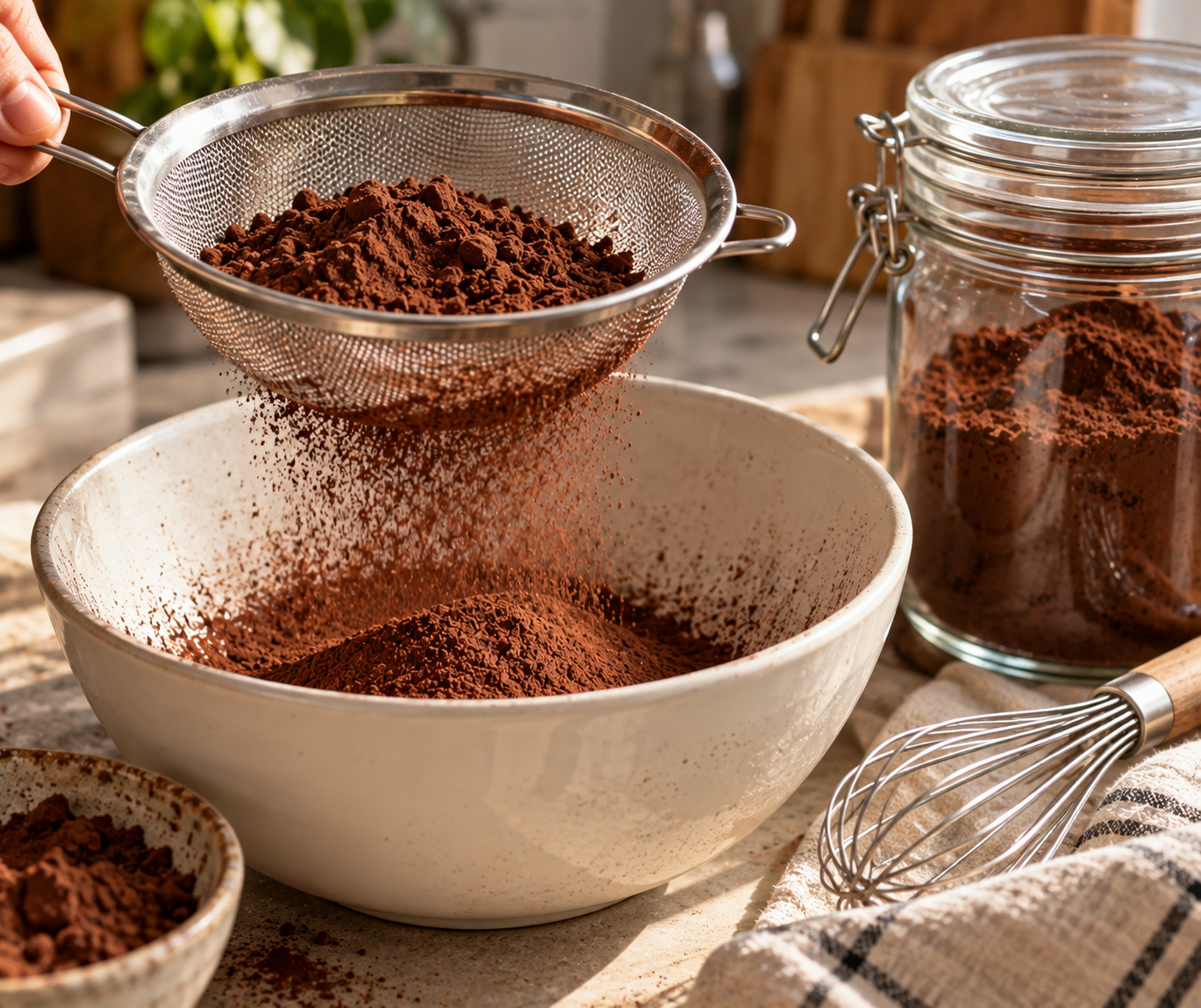
best.
What goes wrong
Cocoa powder is the one staple on this list that people often store too cold. Because chocolate melts in hot weather, many of us put the cocoa tin in the fridge too. That is a mistake.
Cocoa powder is very dry, and it readily absorbs moisture and odours. In the fridge, every time you take the cold jar into a warm kitchen, water condenses inside and on the powder. That causes hard lumps, and over time a loss of colour and aroma. Cocoa also contains some cocoa butter, and fats pick up smells easily, so cocoa stored near onions, garlic or leftovers can take on those smells.
Other common mistakes: leaving it in a folded cardboard box or a tin with a loose lid, keeping it on the shelf above the stove or oven, and dipping in a spoon that was just used for wet batter.
How to fix it
-
- Keep cocoa at room temperature in a cool, dark, dry cupboard, away from the stove and oven. Not in the fridge or freezer.
-
- In hot, humid climates, pick the coolest cupboard in the house, keep the jar tightly sealed, and buy smaller packs. An airtight jar protects cocoa better than the fridge does.
-
- Move it into an airtight glass jar once opened, and keep it away from strong-smelling spices.
-
- Always use a completely dry spoon.
-
- Sift before using. Lumps are normal and harmless, and sifting gives smoother batters and frostings.
-
- Bloom tired cocoa. If your cocoa smells a little flat, whisk it with hot water, hot milk or hot coffee before adding it to the recipe. Heat releases more of its flavour compounds, and your cake tastes more chocolatey.
The same rules apply to both natural and Dutch-processed (alkalised) cocoa.
How to tell it is past its best: stored well, cocoa keeps its quality for a long time, often up to two years. It is past its best when the aroma is weak, the colour looks dull or greyish, or it tastes stale. If you see mould or it smells musty, throw it out.
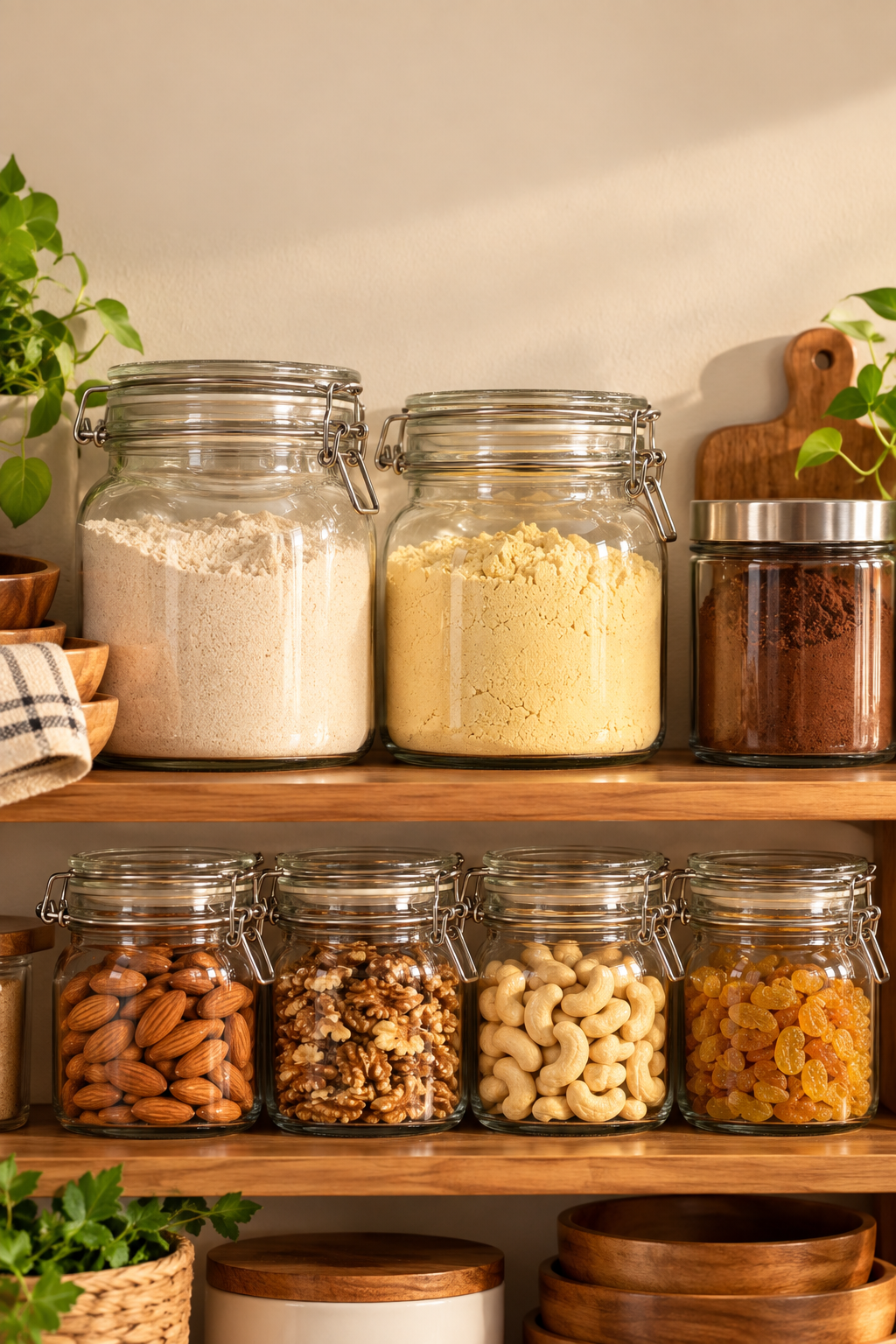
Quick reference: where each staple should live
| Staple | Main enemy | Best place | Fridge or freezer? | Sign it has turned |
|---|---|---|---|---|
| Whole wheat flour | Rancidity, insects | Airtight container, cool cupboard | Yes in warm or humid weather; freeze for long storage | Sour or bitter smell, webbing |
| Chickpea flour | Rancidity, moisture | Airtight glass jar | Yes, recommended in most climates | Bitter taste on the tongue |
| Nuts | Rancidity, mould | Airtight jar | Yes, fridge or freezer | Paint-like smell, soapy taste |
| Dried fruit | Drying out, mould | Airtight jar, separate from nuts | Optional; helps in hot climates | Fuzzy mould, sour smell |
| Spices | Heat, light, steam | Dark drawer away from the stove | Only paprika and chilli powder, optional | Faint aroma, dull colour |
| Cocoa powder | Moisture, odours | Airtight jar, cool dark cupboard | No | Weak aroma, dull grey colour |
A final word
Good baking starts long before the oven is switched on. Fresh flour gives sweeter, better-rising bread. Fresh chickpea flour gives fritters and flatbreads without that bitter edge. Fresh nuts give a clean, sweet crunch, fresh spices give real aroma, and well-stored cocoa gives a cake that actually tastes of chocolate.
Wherever you are in the world, from a humid kitchen in Manila to a centrally heated flat in Toronto, the rules are the same: keep your staples airtight, dry, dark and as cool as your climate demands.
You don’t need to throw everything out today. Pick one staple this week, move it to the right jar and the right place, and notice the difference in your next bake.
Tell me in the comments: which of these five were you storing wrong, and where in the world is your kitchen?
Related Articles You’ll Love
-
- Trending Ingredients for Fall and Winter Baking: Elevate Your Creations with Seasonal Favorites – The seasonal ingredients worth stocking in your pantry for cosy autumn and winter bakes.
-
- Baking: A Delicious Science Anyone Can Master – The simple science behind baking, explained so anyone can bake with confidence.
-
- What Does Baking Powder Do to Cookies? A Complete Guide – How one small pantry ingredient changes the rise, spread and texture of your cookies.
Want more baking magic in your life? Subscribe to my YouTube channel — Deepali Ohri — for new recipes every week. Follow along for daily baking inspiration: Instagram | Pinterest | Facebook