Why Your Cake Sinks in Humid Weather (And How to Fix It)
There is a particular kind of heartbreak that only a baker knows.
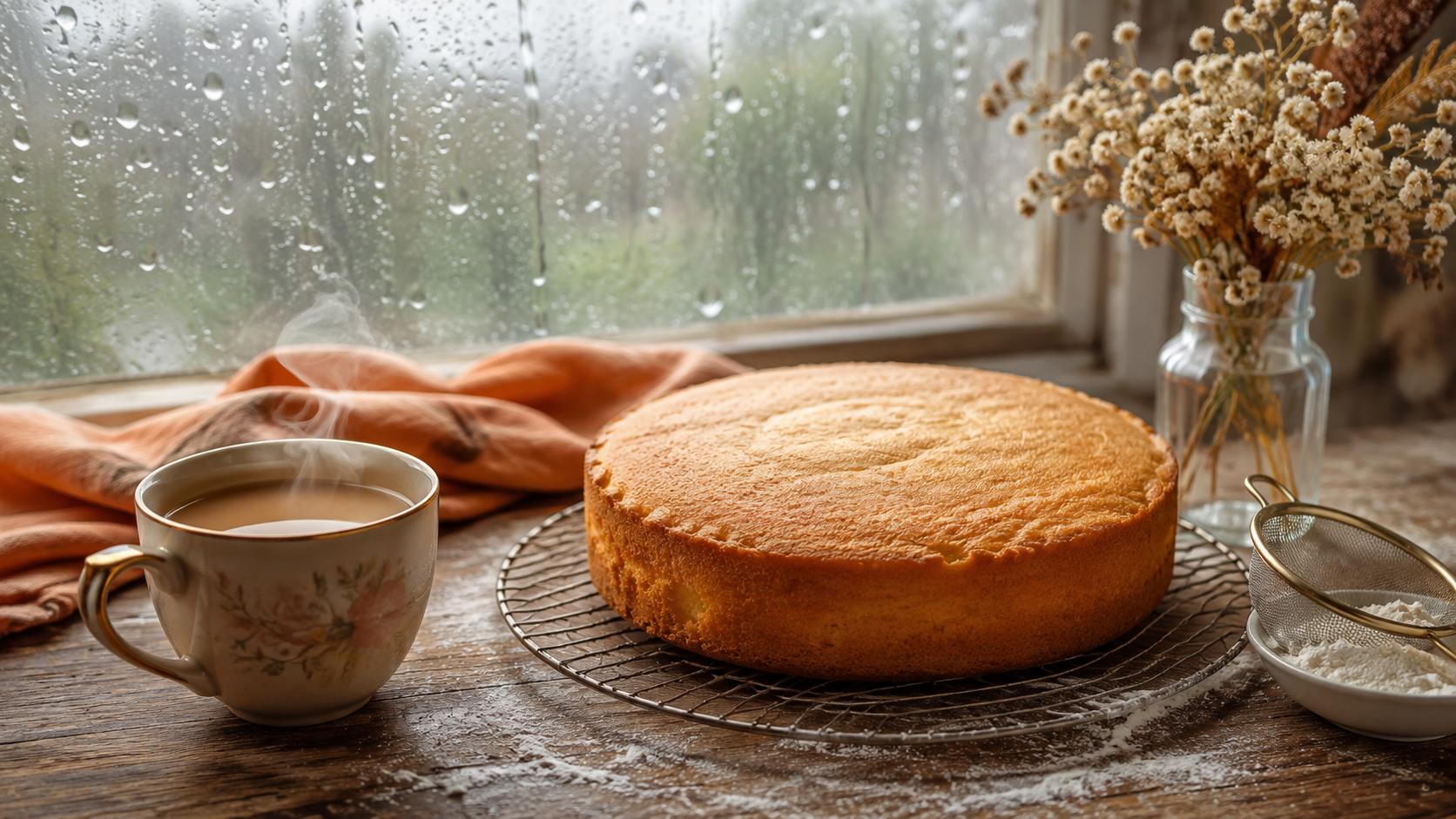
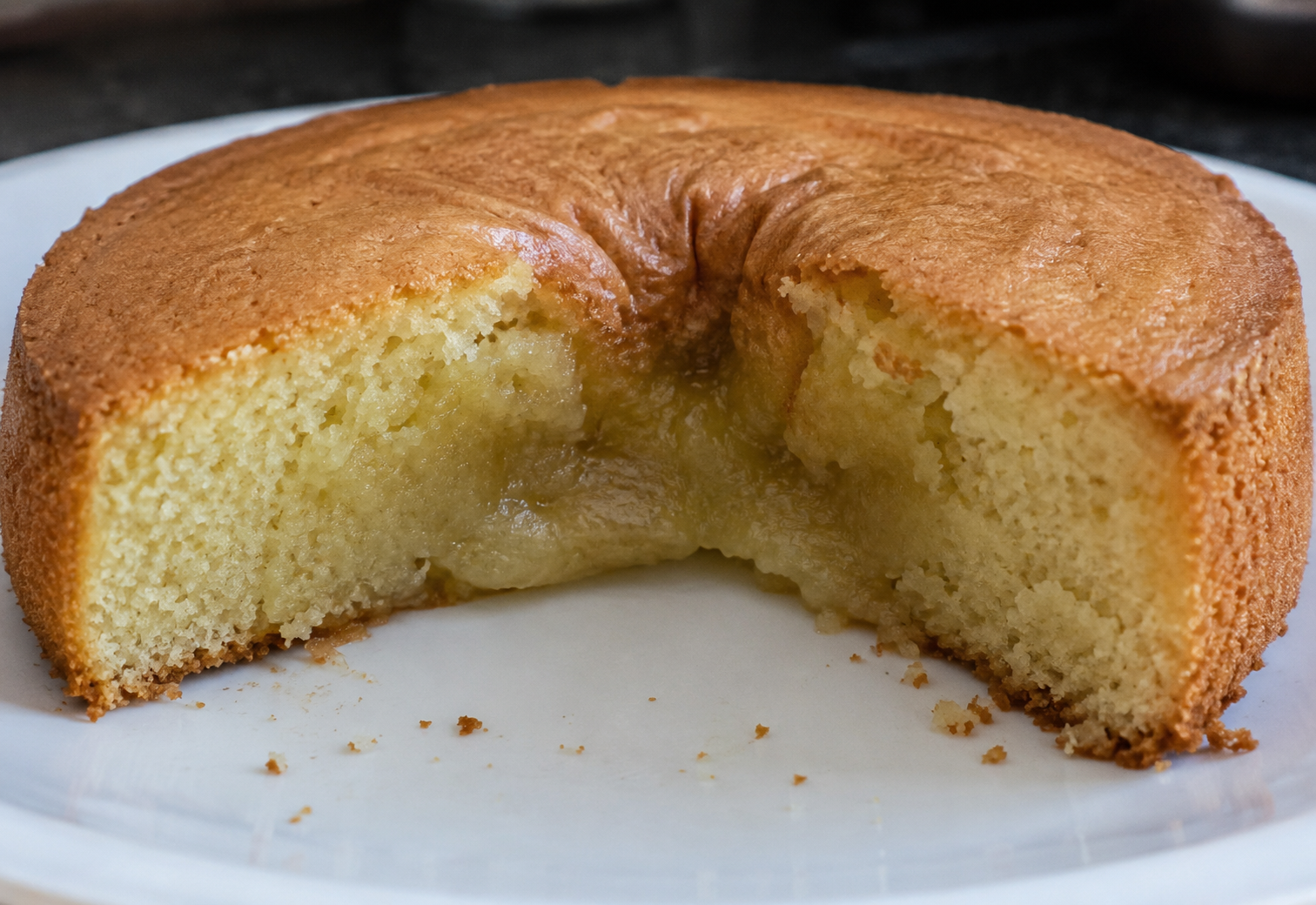
You’ve done everything right. The batter was silky. The oven was hot. Outside, the monsoon is doing its beautiful, dramatic thing — that first proper rain after a long summer, the smell of wet earth drifting through the kitchen window, a cup of chai waiting. You slide the tin in, you wait, the whole house starts to smell like a bakery. And then you open the oven… and there it is. That sad little crater in the middle. A cake that rose like a dream and then sat back down like it changed its mind.
If this has happened to you in June, July or August — or if you live somewhere humid all year round and it happens constantly — I want you to hear this first: it is not because you are a bad baker. The exact same recipe that behaved perfectly in April is misbehaving now, and the reason is sitting in the air all around you.
Today there is no recipe. Just teaching. Because once you understand why humidity sinks your cakes, you will never be at its mercy again. Let me walk you through it the way I wish someone had walked me through it years ago.
First, What’s Actually Happening Inside Your Cake
To understand why a cake sinks, you have to understand what a cake actually is while it’s baking.
A cake batter is essentially a foam — a liquid full of tiny air bubbles and gas. As it bakes, two things happen at the same time, and the whole game depends on their timing.
One: the gases expand. Air you beat in, steam from the water in the batter, and carbon dioxide from your baking powder or soda all heat up and push outward. This is the rise. Your cake climbs.
Two: the structure sets. As the batter gets hotter, the egg proteins firm up (coagulate) and the starch in the flour swells and thickens (gelatinises). Somewhere around 60–80°C (140–175°F), your wobbly liquid batter quietly turns into a solid, springy sponge that can hold its own shape. This is the set.
A perfect cake happens when the structure sets at the same moment the rise peaks — so the sponge locks in all that lift and stays tall.
A cake sinks when the rise wins the race and the set arrives too late. The batter puffs up, but the walls are still soft and liquid inside. There’s nothing strong enough to hold up the roof. So gravity does what gravity does, and the under-set centre — always the last part to cook — collapses back down into that familiar dip.
Hold on to that one idea, because everything below comes back to it: sinking is a timing problem. The rise happened. The set was too slow. And humidity is brilliant at slowing down the set.
Why Humidity Is the Hidden Saboteur
Here’s the frustrating part. Humidity doesn’t attack your cake in the oven, where you can see it. It sabotages your ingredients before they ever get there. Let me show you the five ways.
1. Your Flour Is Quietly Drinking the Air
Flour is hygroscopic — a lovely word that simply means it pulls moisture out of the air and holds on to it. Leave a bag of flour open on a humid day and it is, very literally, drinking.
This matters enormously if you measure flour by the cup. A cup of monsoon-damp flour holds more water and less actual flour than a cup measured in dry weather — you’re scooping water where you think you’re scooping structure. So your batter ends up wetter and weaker than the recipe intended, before you’ve added a single drop of milk. Weaker walls set slower. Slower set means sink.
2. Your Baking Powder Is Losing Its Punch
Baking powder and baking soda are moisture-sensitive by design — they’re built to react the instant they meet water. That’s the whole point. But in a humid kitchen, ambient moisture in the air can start that reaction early, right there in the jar or the mixing bowl.
The result is a leavener that has already spent part of its power before your batter reaches the oven. You often get a big, enthusiastic early rise (from whatever gas is left) that simply cannot be sustained — the classic rise-high-then-fall dome-and-crater. Damp leaveners also clump, so what you scoop may be weaker than a fresh, dry spoonful.
3. Sugar Is Holding Water Too
Sugar is hygroscopic just like flour — it’s one of the reasons a good cake stays moist for days. But that same thirst works against you in monsoon: humid sugar carries unaccounted-for water into your batter and can clump. More stray moisture, again, means a slower set.
4. A Wetter Batter Simply Takes Longer to Set — So the “Normal” Bake Time Underbakes It
This is the big one. This is the mechanism behind most sunken cakes.
Water takes a lot of energy to heat. The more hidden water your flour and sugar dragged in, the slower your batter’s centre climbs through that crucial 60–80°C setting zone — and the longer it takes to reach the roughly 96–98°C (205–210°F), close to boiling, at which the very middle is truly cooked.
So you bake for the time the recipe says. The top looks golden. But inside, the centre is still soft and under-set. You pull it out, the fragile middle has nothing holding it up, and — sink. Underbaking is the single most common mechanical cause of a sunken cake, and humidity is what turns your usual, reliable bake time into an under-bake without you changing a thing.
(And for those of you baking eggless — this hits you too. With no egg proteins to firm things up, your structure leans even harder on starch and on being baked fully through. Humidity makes that margin thinner, not wider.)
5. Your Warm, Damp Kitchen Is Working Against You
A hot, sticky monsoon kitchen softens butter faster than you expect. For creaming-method cakes, over-soft or half-melted butter can’t trap air properly, so you start with less lift and a weaker foam. And cold ingredients pulled straight from the fridge into humid air collect condensation — more little droplets of stray water sneaking into your batter.
How to Fix It — Your Monsoon Baking Toolkit
Now the good part. Every single problem above has a fix, and none of them requires a new recipe — just a few smarter habits. This is exactly what I do in my own Jalandhar kitchen the moment the rains arrive.
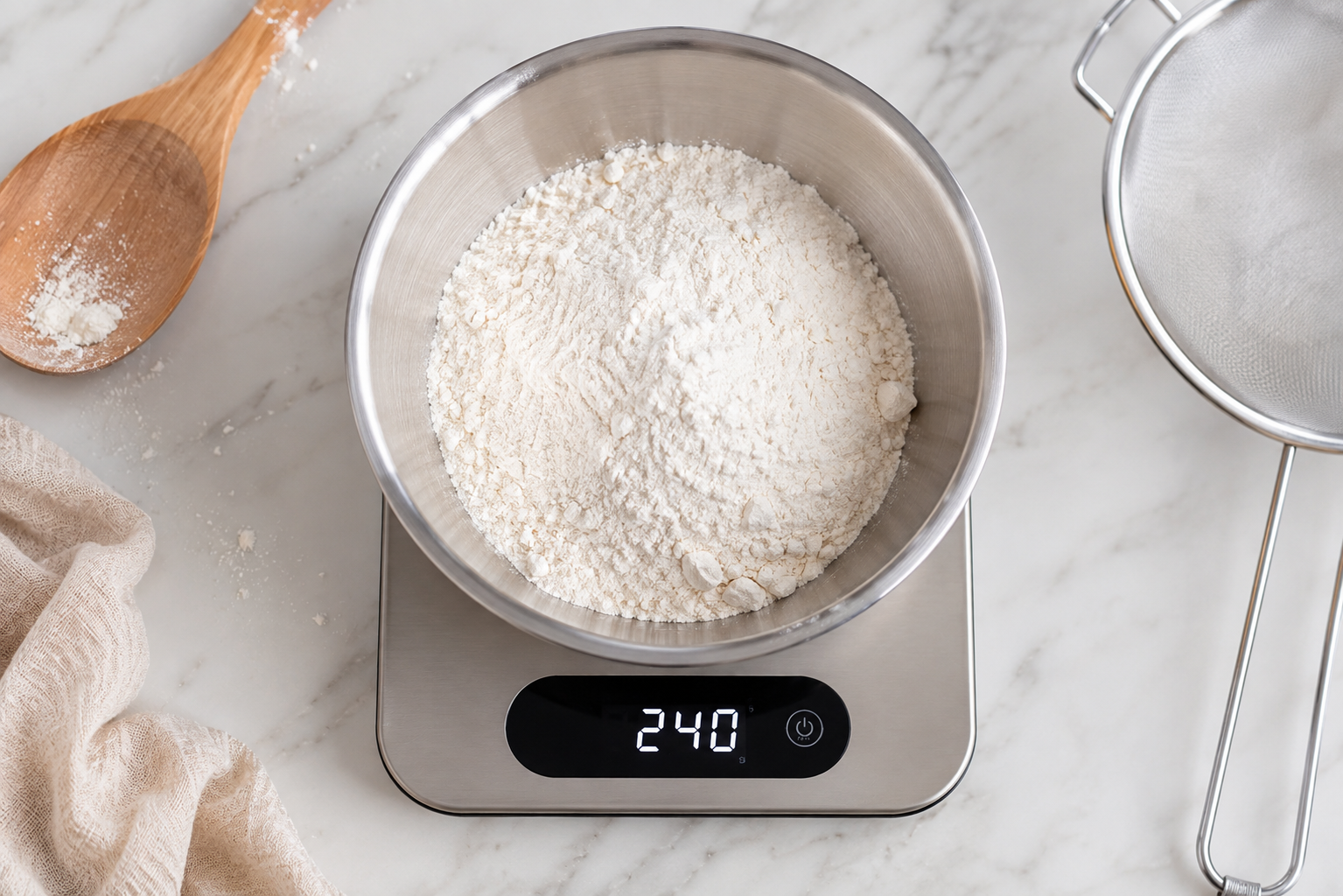
- Weigh, don’t scoop. This is the biggest fix of all. A kitchen scale doesn’t care whether your flour is damp — 200 grams is 200 grams of actual flour every time. Cups lie in the monsoon; grams tell the truth. If you buy one thing this season, buy a digital scale.
- Keep your flour and leaveners bone-dry. Store flour, sugar, baking powder and soda in airtight containers, not open bags. Never dip a wet spoon into them. In peak humidity, buy your leaveners in smaller quantities so they’re always fresh. If your flour feels heavy or clumpy, spread it on a tray in a very low oven for a few minutes (or sift and air it) to drive off some of the moisture before you bake.
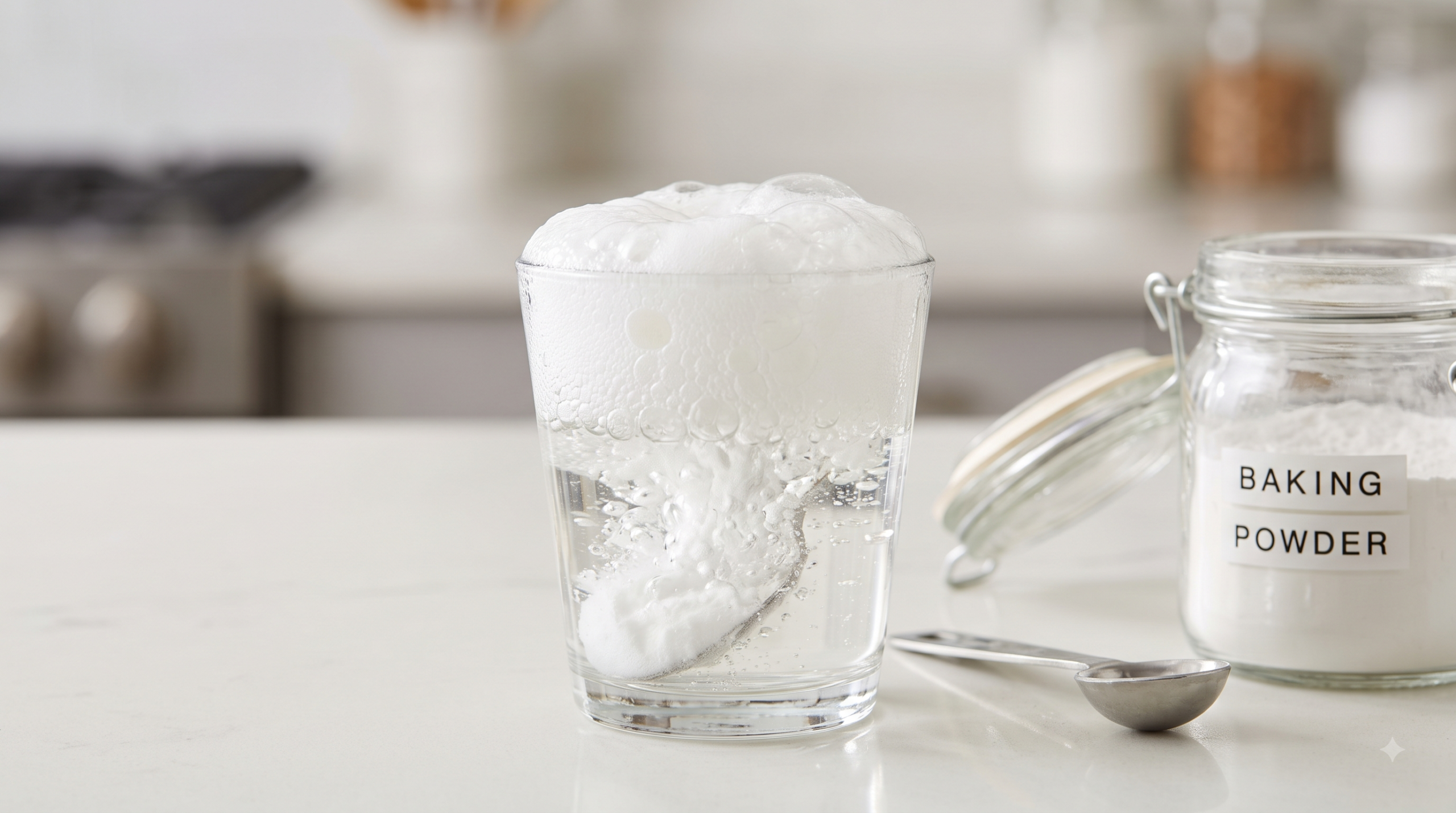
- Test your leavener before you trust it. Thirty seconds saves a whole cake. Drop half a teaspoon of baking soda into a little vinegar — it should fizz aggressively. Stir a teaspoon of baking powder into hot water — same, it should bubble up straight away. A weak, lazy fizz means it’s spent. Replace it.
- Hold back a little liquid. Since your flour and sugar have already smuggled in extra moisture, quietly reduce the recipe’s milk or water by a tablespoon or two. It’s a small correction that pulls your batter back towards the consistency the recipe was written for — and a slightly stiffer batter builds sturdier walls.
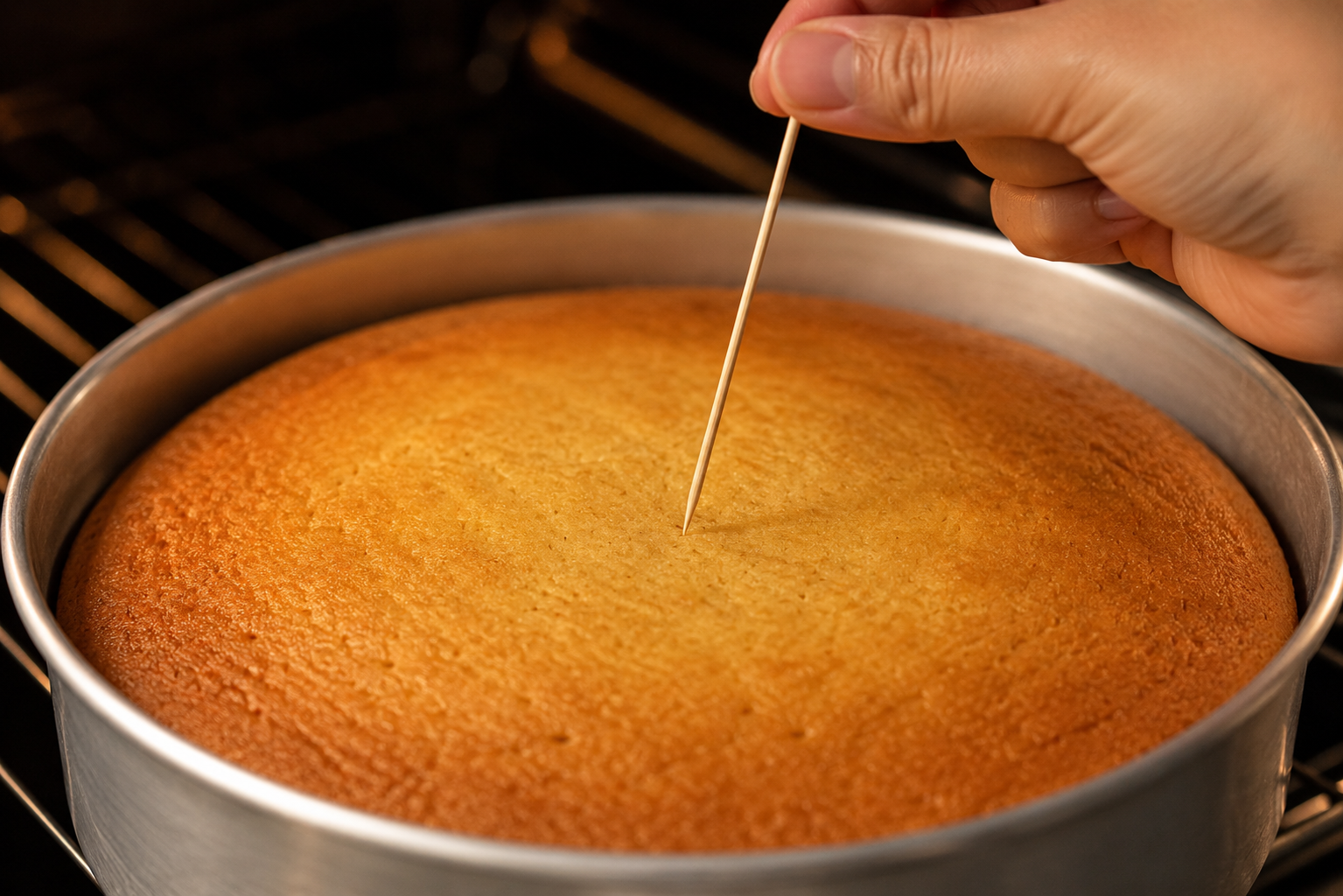
- Bake by the skewer, not by the clock. This is the habit that changes everything. Because a humid batter sets slower, it almost always needs a few extra minutes. So stop trusting the timer and start trusting the cake: it’s done when a skewer inserted into the centre comes out clean (or with a crumb or two, not wet batter) and the top springs back when you press it gently. In stubborn weather, dropping your oven by 10°C and baking a little longer helps the centre set evenly before the outside over-browns.
- Measure your leavener precisely, and don’t overmix. Too much baking powder makes a cake shoot up and then collapse — humidity only makes that worse. Level your spoons. And once the flour goes in, mix just until combined; overmixing develops the flour’s gluten and knocks out the very air you worked to build.
- Don’t open the oven door too early. A sudden rush of cool air before the structure has set can drop the temperature just enough to collapse a fragile, humid-weather cake. Resist the peek until you’re at least three-quarters through the bake.
- Cool completely before you cover it. A warm cake sealed in a box or under cling film steams itself — trapped moisture makes the crumb dense and soggy and can cause the middle to sink even after it’s out of the oven. Let it cool fully, then store it airtight.
Your Quick Monsoon Baking Checklist
Pin this to your kitchen wall for the season:
- ✅ Weigh your flour and sugar — don’t scoop.
- ✅ Store flour, sugar and leaveners airtight.
- ✅ Test your baking powder and soda before using.
- ✅ Reduce liquid by 1–2 tablespoons.
- ✅ Bake longer than usual, and check with a skewer, not the timer.
- ✅ Consider dropping the oven 10°C for a slower, more even set.
- ✅ Level your leavener; mix just until combined.
- ✅ Don’t open the door early.
- ✅ Cool completely before covering.
One Last Thing
Baking in the monsoon is not a problem to be solved so much as a season to be understood. Once you know that the air itself is an ingredient — one you can’t measure but absolutely must respect — you stop blaming yourself and start adjusting with confidence. That flat, sunken cake was never a verdict on your talent. It was just physics, quietly happening in the humidity, waiting for you to learn its language.
Now you have. So go and bake, rain or no rain. Weigh your flour, test your soda, trust your skewer, and let the kettle sing while the oven works. A tall, proud cake and a hot cup of chai on a grey, rainy afternoon — honestly, is there anything better?
Bake ho jaayega. Bilkul ho jaayega. 💛
Related Articles You’ll Love
- How to Store Cakes, Cookies and Bread — keep your bakes fresh and soft for longer.
- What Does Baking Powder Do? — how leavening really works in your bakes.
- Baking: A Delicious Science — the key principles behind bakes that turn out right.
Want more baking magic in your life? Subscribe to my YouTube channel — Deepali Ohri — for new recipes every week. Follow along for daily baking inspiration: Instagram | Pinterest | Facebook