Grams vs Cups: Why Your Cake Turns Out Different Every Time
Hello lovelies,
You follow a recipe exactly, the cake comes out soft and golden, and the next time you make it, the same recipe gives you something dense and dry. You did nothing different. Or did you?
I was a teacher for many years before I started baking on camera, and I still believe a good lesson starts with the “why”. So today, no recipe. Just the one habit that changes baking more than any ingredient: weighing instead of measuring with cups.
Why one cup is never just one cup
A cup measures space, not weight. Flour is light and fluffy, and it packs down easily. So how much flour lands in your cup depends on how you fill it.
- Spooned in and levelled: about 120–125 g of maida in one cup.
- Scooped straight from the bag or dabba: the cup presses the flour down, and you can end up with 140–150 g.
That is up to 25–30 g extra in every cup. In a recipe with two cups of flour, you have quietly added almost a quarter cup more flour than the recipe wanted. That is the dense, dry cake.
And the cups themselves are not the same everywhere. An American cup is about 240 ml, a metric cup (used in Australia and on many recipe sites) is 250 ml, and the steel cups and katoris in our kitchens can be anything from 150 to 250 ml. When a recipe says “1 cup”, you don’t always know whose cup it means.
Grams don’t change
100 g of flour is 100 g of flour in my kitchen in Jalandhar and in yours, wherever you are. It doesn’t matter how you scoop it, how humid the day is, or which cup set you own. That is why my recipes give grams, and why I weigh when I bake.
A quick cups-to-grams chart for the ingredients I use most
| Ingredient | 1 cup (spooned and levelled) |
|---|---|
| Maida / all-purpose flour | 120–125 g |
| Cake flour | 120 g |
| Whole wheat flour (atta) | 120–130 g |
| Caster sugar / granulated sugar | 200 g |
| Brown sugar (lightly packed) | 200–210 g |
| Icing sugar | 120 g |
| Butter | 225–227 g |
| Cocoa powder | 85–100 g |
| Milk or water | 240 g (240 ml) |
| Curd / yogurt | 240–245 g |
These are close guides, not laws. Different brands weigh slightly differently, which is one more reason the scale wins.
If you only have cups: the spoon-and-level method
- Stir the flour in its container first to loosen it.
- Spoon it gently into the cup. Don’t press, and don’t tap the cup.
- Level the top with the back of a knife.
This gets you much closer to the 120–125 g a recipe expects. It is still not exact, but it is far better than scooping.
Small amounts: spoons are fine
For baking powder, baking soda, salt, vanilla and spices, measuring spoons are perfectly fine, as long as you level them. Most home scales can’t weigh half a teaspoon accurately anyway.

Do you need an expensive scale?
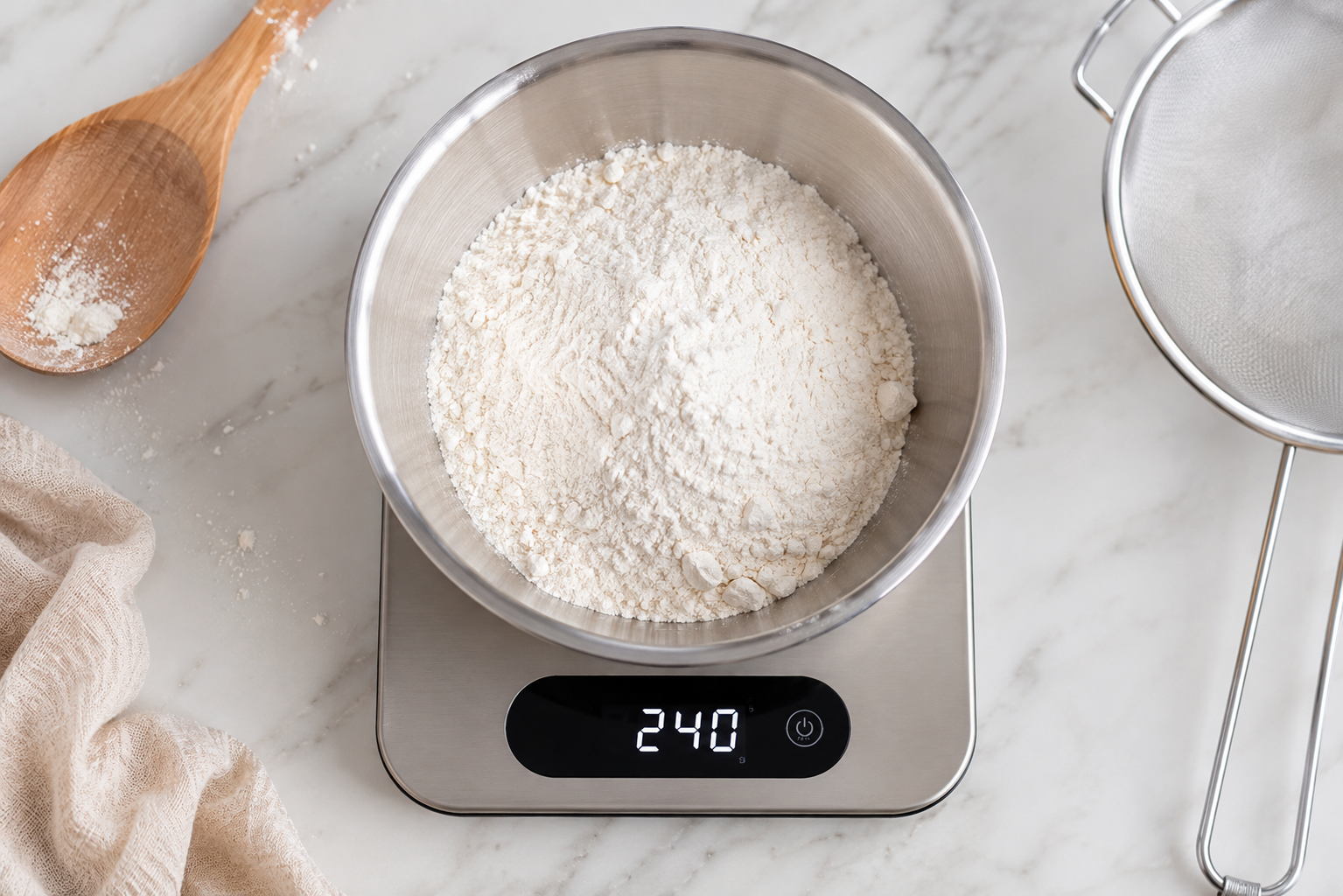
No. A simple digital kitchen scale that weighs in 1 g steps and has a tare button (to set the bowl to zero) is all you need. Put your bowl on it, press tare, and add the flour until you reach the number. Press tare again and add the sugar. Fewer cups to wash, too.
You’ll find the kitchen tools I use on my Amazon storefront.
One habit, better cakes
If your cakes keep turning out different, don’t change the recipe first. Weigh it. Most of the time, that one change is the answer.
Related Articles You’ll Love
- Why Your Cake Sinks in Humid Weather: what humidity does to your bake, and how to fix it.
- What Does Baking Powder Do?: how leavening really works in your bakes.
- Baking: A Delicious Science: the key principles behind bakes that turn out right.
Want more baking magic in your life? Subscribe to my YouTube channel, Deepali Ohri, for new recipes every week. Follow along for daily baking inspiration: Instagram | Pinterest | Facebook
XOXO, Deepali