
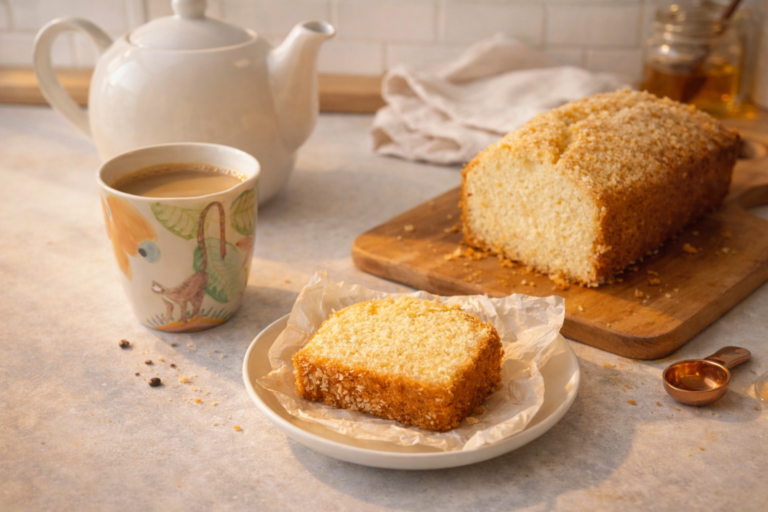
There are cakes you make for occasions. And then there are cakes you make just because it is three in the afternoon, the kettle is on, and something warm and fragrant from the oven sounds like exactly the right idea. This coconut butter cake is firmly in that second category.
I still remember the first time I made this recipe. I was looking for something that would feel a little special without requiring a long list of ingredients or hours in the kitchen. Coconut felt like the answer — fragrant, slightly exotic, yet completely familiar to anyone who grew up in an Indian household where coconut found its way into everything from chutneys to sweets to pickles.
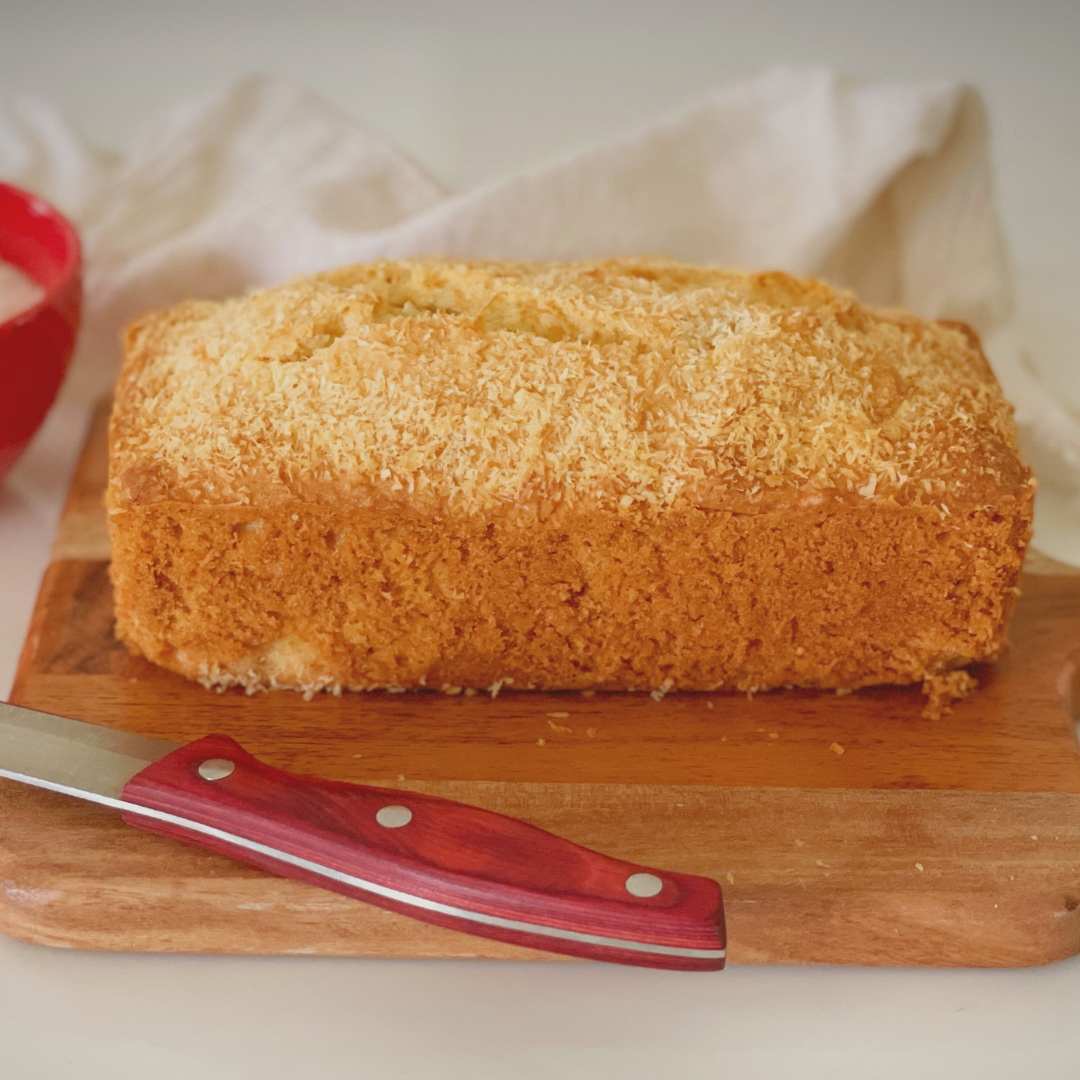
The result was better than I expected: a beautifully golden loaf with crisp edges, a soft and tender crumb, and the most delicious coconut aroma filling the kitchen. I made it again the very next week. And the week after that. This recipe works — every single time.
Whether you are a beginner baker or someone who has been baking for years, this coconut butter cake will become a reliable favourite in your kitchen. Let me show you exactly how to make it.
Why You Will Love This Coconut Butter Cake
- Uses simple pantry staples you likely already have at home
- The batter comes together in under 15 minutes
- Works beautifully as a loaf cake or mini loaf cakes — perfect for gifting
- Soft, moist crumb with crisp golden edges
- Naturally fragrant from the desiccated coconut — no artificial flavouring needed
- Scales easily — make a bigger batch and freeze for later
- An ideal tea-time cake, breakfast cake, or addition to a holiday spread
Ingredients You Will Need
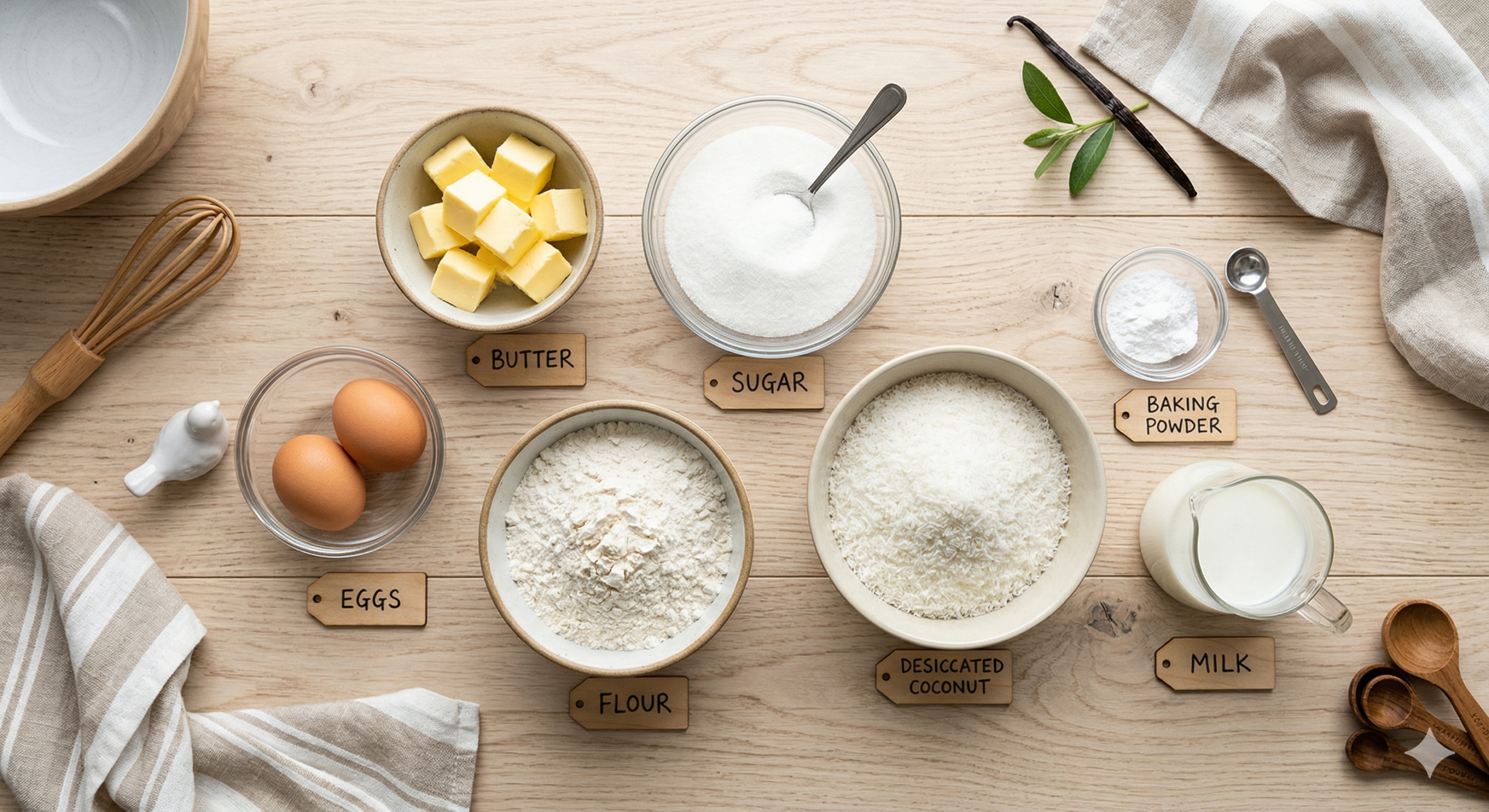
Here is everything that goes into this coconut butter cake. Simple, honest ingredients — nothing fancy required.
- 2 eggs
- 1 teaspoon vanilla extract
- 1/2 cup (100g) soft butter
- 1/2 cup (100g) caster sugar
- 2/3 cup (100g) cake flour
- 1/2 teaspoon baking powder
- 4 to 6 teaspoons (20 to 40ml) milk
- 1/3 cup (30g) desiccated (dry shredded) coconut, plus extra for topping
Ingredient Notes & Substitutions
Butter: Use unsalted soft butter at room temperature. This is important — cold butter will not cream properly and can leave you with a dense, uneven cake. Take the butter out of the fridge at least 30 to 45 minutes before you begin.
Caster Sugar: The fine grain of caster sugar creams more easily with butter than regular granulated sugar. If you do not have caster sugar, you can pulse granulated sugar in a blender for a few seconds to make it finer.
Cake Flour: Cake flour has a lower protein content than all-purpose flour, which gives the cake its light, tender crumb. If you do not have cake flour, you can substitute all-purpose flour, though the crumb will be very slightly denser. To mimic cake flour: for every 1 cup of all-purpose flour, remove 2 tablespoons and replace with 2 tablespoons of cornflour (cornstarch).
Milk: The milk helps adjust the batter consistency. You will need anywhere between 20ml and 40ml depending on your flour and the size of your eggs. Start with less and add more as needed — the batter should be soft and scoopable but not runny.
Desiccated Coconut: This recipe uses dry shredded coconut (also called desiccated coconut), not fresh coconut. You can find it in the baking aisle of most supermarkets. Do not substitute with sweetened shredded coconut or coconut cream — both will change the texture and flavour significantly.
Eggs: This recipe calls for 2 whole eggs. I have not tested an eggless version of this specific cake yet. If you are looking for an eggless coconut cake, check my other recipes on the blog — I will link them here when available.
How to Make Coconut Butter Cake — Step by Step
Step 1: Prepare Your Tin and Preheat the Oven
Preheat your oven to 170 degrees Celsius (340 degrees Fahrenheit). Grease and line a 6 to 7 inch loaf tin with parchment paper. Make sure the paper comes up the sides so the cake is easy to lift out after baking.
Step 2: Beat the Eggs
Crack both eggs into a small bowl or jug. Add the vanilla extract. Give them a quick whisk with a fork or hand mixer just to combine — you are not whipping them here, simply breaking them up so they blend more smoothly into the batter later. Set aside.
Step 3: Cream Butter and Sugar
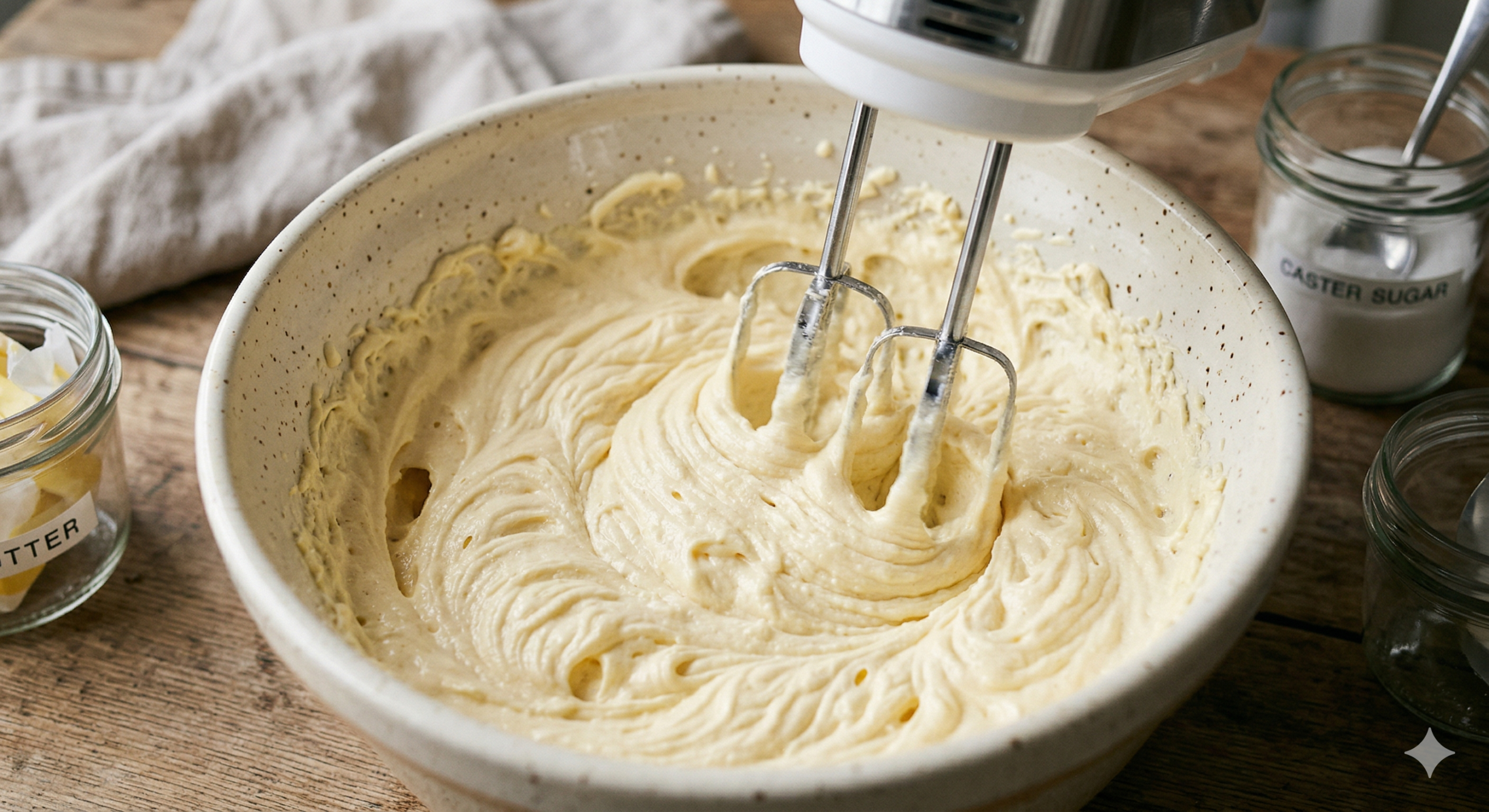
Place the soft butter and caster sugar into your mixing bowl. Use a rubber spatula to mix them together roughly first — this prevents the sugar from flying out when you switch on the hand mixer. Then beat with a hand mixer on medium-high speed for about 2 to 3 minutes, until the mixture is pale, light, and fluffy. Do not rush this step; proper creaming is what gives the cake its lift and tender texture.
Step 4: Add the Egg Mixture
With the mixer running on medium speed, add the egg and vanilla mixture gradually in 2 to 3 small additions. Allow each addition to fully incorporate before adding the next. Adding eggs all at once can cause the batter to curdle. If it does look slightly split, do not worry — it will come back together once the flour goes in.
Step 5: Add Flour and Baking Powder
Switch off the hand mixer and set it aside. From this point, you will use only your spatula — overmixing with a machine once the flour is in will develop too much gluten and make the cake tough. Sift the cake flour and baking powder directly into the butter mixture. Fold gently with the spatula using light hands and broad strokes, just until there are no visible streaks of flour.
Step 6: Adjust with Milk
The batter may look quite thick at this point — that is normal. Add milk gradually, starting with 20ml. Fold it in and check the consistency. You are looking for a batter that drops softly from the spatula but is not runny. Add a little more milk if needed, up to 40ml. Because we are adding coconut next, we do not want the batter too stiff or the cake will dry out.
Step 7: Fold in the Coconut
Add the desiccated coconut and fold it through the batter until it is evenly distributed. Again — gentle hands, do not overmix.
Step 8: Transfer to Tin and Top with Coconut
Spoon the batter into your prepared loaf tin and smooth the top with your spatula. Sprinkle a generous layer of desiccated coconut over the surface — this creates a beautiful toasted coconut crust as the cake bakes. Use as much or as little as you like here.
Step 9: Bake
Bake at 170 degrees Celsius for 30 to 35 minutes. Do not open the oven before the 25-minute mark. The cake is done when it is golden brown on top, has pulled slightly away from the sides of the tin, and a skewer inserted into the centre comes out clean.
Step 10: Cool and Unmould
Leave the cake to cool in the tin on a wire rack for 10 to 15 minutes. Then lift it out and allow it to cool completely before slicing. Cutting into a warm butter cake can cause it to crumble.
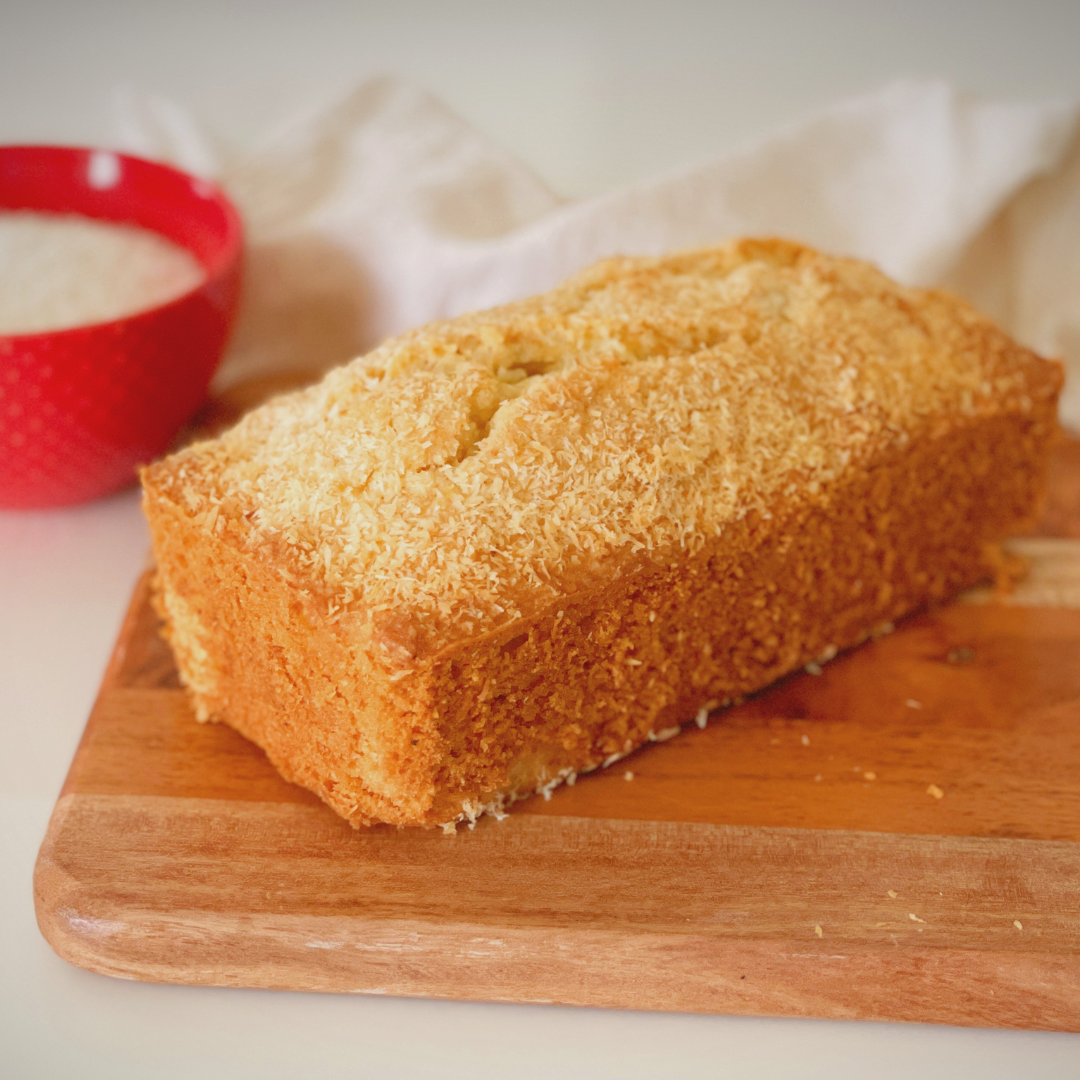
Easy Coconut Butter Cake
Equipment
- Hand mixer
- 6–7 inch loaf tin
- parchment paper
- rubber spatula,
- wire rack
- mixing bowls
Ingredients
- 2 eggs
- 1 teaspoon vanilla extract
- 1/2 cup butter — unsalted, soft, room temperature ((100g) )
- 1/2 cup Caster Sugar ((100g))
- 2/3 cup Cake Flour ((100g))
- 1/2 teaspoon Baking Powder
- 4–6 teaspoons Milk— added gradually ((20–40ml) )
- 1/3 cup Desiccated Coconut in batter + extra for topping ((30g) )
Instructions
- Preheat oven to 170°C (340°F). Grease and line a 6–7 inch loaf tin with parchment paper.
- In a small bowl, whisk together the eggs and vanilla extract until just combined. Set aside.
- In a large mixing bowl, use a rubber spatula to roughly combine the soft butter and caster sugar. Then beat with a hand mixer on medium-high for 2–3 minutes until pale, light, and fluffy.
- With the mixer on medium speed, add the egg mixture in 2–3 small gradual additions, fully incorporating each addition before adding the next.
- Switch off the hand mixer. Sift the cake flour and baking powder directly into the butter mixture. Fold gently with a spatula until just combined — do not overmix.
- Add milk gradually (start with 20ml) and fold until the batter is soft and scoopable — not runny, not stiff.
- Add the desiccated coconut and fold through until evenly distributed.
- Spoon batter into the prepared tin. Smooth the top and sprinkle generously with extra desiccated coconut.
- Bake for 30–35 minutes, until golden brown, pulling away from the edges, and a skewer inserted in the centre comes out clean.
- Cool in the tin on a wire rack for 10–15 minutes. Turn out and cool completely before slicing.
Video
Notes
- Soft butter is essential — take it out of the fridge at least 30–45 minutes before starting.
- Do not overmix once the flour is added. Fold by hand with a spatula for a tender crumb.
- The coconut topping toasts as the cake bakes and creates a lovely golden crust — use as much as you like.
- For mini loaves: divide between 2 small tins and reduce bake time to 20–25 minutes.
- Storage: Airtight container at room temperature for 2 days, fridge for up to 5 days, or freeze individual slices for up to 1 month.
Tips for the Best Coconut Butter Cake
- Always use room temperature butter. This is the single most important tip for any butter cake. Cold butter will not cream properly.
- Do not skip the gradual egg addition. Adding eggs slowly prevents curdling and gives you a smoother, more emulsified batter.
- Switch to a spatula after adding flour. The hand mixer’s job is done once the eggs are in. Folding by hand keeps the crumb tender.
- Do not overbake. Butter cakes can dry out quickly past their optimal baking time. Check at 30 minutes by inserting a skewer — if it comes out with just a few moist crumbs, the cake is ready.
- The coconut topping is not optional in my opinion. It gives the cake a slightly crunchy, toasted finish that makes every slice look and taste bakery-worthy.
- For mini loaves: divide the batter between two small loaf tins and reduce baking time to 20 to 25 minutes.
How to Serve Coconut Butter Cake
This cake is wonderfully versatile and suits any time of day.
- Afternoon tea: Slice and serve alongside masala chai, English breakfast tea, or filter coffee. The coconut aroma pairs beautifully with both spiced and plain teas.
- Breakfast: A thick slice with a cup of coffee makes for a satisfying and slightly indulgent start to the day.
- High tea or parties: Cut into smaller fingers or squares and serve on a platter. This cake plates beautifully and holds its shape well.
- Holiday baking: The golden colour, fragrant coconut, and festive appearance make this an ideal addition to a Christmas or Diwali treats tray.
- Gifting: Baked in mini loaf tins, wrapped in parchment and tied with a ribbon, these make a thoughtful homemade gift.
How to Store
- Room temperature: Wrap the cooled cake in cling film or store in an airtight container. It stays fresh at room temperature for up to 2 days.
- Refrigerator: Keeps well in the fridge for up to 5 days. Bring to room temperature or warm briefly in the microwave before serving.
- Freezer: Slice the cake, wrap individual slices in cling film and freeze for up to 1 month. Thaw at room temperature for a couple of hours.
Frequently Asked Questions
Can I make this cake without eggs?
This specific recipe uses eggs for structure and richness. I have not tested an eggless version of this particular cake yet. For eggless coconut options, check my other recipes or leave a comment — I love hearing what you want me to bake next!
Can I use fresh coconut instead of desiccated?
Fresh coconut has a much higher moisture content than desiccated, which will change the texture of the cake significantly. Stick with dry shredded or desiccated coconut for this recipe.
Can I use a round tin instead of a loaf tin?
Yes! A 6-inch round tin works well. Keep the temperature the same and check for doneness at around 28 to 30 minutes as round tins can bake slightly faster than loaf tins.
My batter curdled when I added the eggs — what do I do?
Do not panic. Add a tablespoon of your measured flour to the batter and continue mixing — this usually brings it back together. Curdling usually happens if the eggs are too cold or added too quickly.
Can I add coconut extract for more flavour?
Absolutely. Half a teaspoon of coconut extract added along with the vanilla will amplify the coconut flavour beautifully if you want a more pronounced taste.
A Little Note Before You Go
I love how this coconut butter cake manages to feel both special and completely unfussy at the same time. It is the kind of recipe that does not demand much from you, yet gives back so generously — a beautiful crumb, golden edges, and a kitchen that smells absolutely wonderful.
If you try this recipe, I would love to see how it turns out! Share your pictures on Instagram and tag me at @deepaliohri — I genuinely look forward to seeing your bakes and reading your comments.
And if there is a recipe you have been wanting me to make, drop it in the comments below. Until next time — happy baking!
— Deepali